this post was submitted on 08 Jan 2024
7 points (100.0% liked)

Linux Gaming

27973 readers
1069 users here now

Discussions and news about gaming on the GNU/Linux family of operating systems (including the Steam Deck). Potentially a $HOME away from home for disgruntled /r/linux_gaming denizens of the redditarian demesne.

This page can be subscribed to via RSS.

Original /r/linux_gaming pengwing by uoou.

No memes/shitposts/low-effort posts, please.

That includes posts generated by LLMs. It doesn’t matter if you “don’t have the time” or “would’ve written the same anyway”, or if “everyone’s doing it geez get with the times”.

For now it’ll also include “AI”-assisted projects that haven't had at least two months of (public, verifiable) dev time behind them.

Resources

Help:

Launchers/Game Library Managers:

General:

Discord:

IRC:

Matrix:

Telegram:

founded 3 years ago
MODERATORS
 

I have a Dell laptop with Intel and Nvidia GPU and Sonnet 750 eGPU enclosure with AMD card. Monitor is connected via USB-C to laptop.

glxinfo correctly shows AMD GPU as renderer when I run

# DRI_PRIME=1 glxinfo | grep "OpenGL renderer"
OpenGL renderer string: AMD Radeon RX 7900 XTX (gfx1100, LLVM 17.0.6, DRM 3.54, 6.6.9-1-default)

When I try to run steam or benchmark like Superposition though, they run using Intel card with terrible performance.

DRI_PRIME=1 ./Unigine_Superposition-1.1/bin/launcher
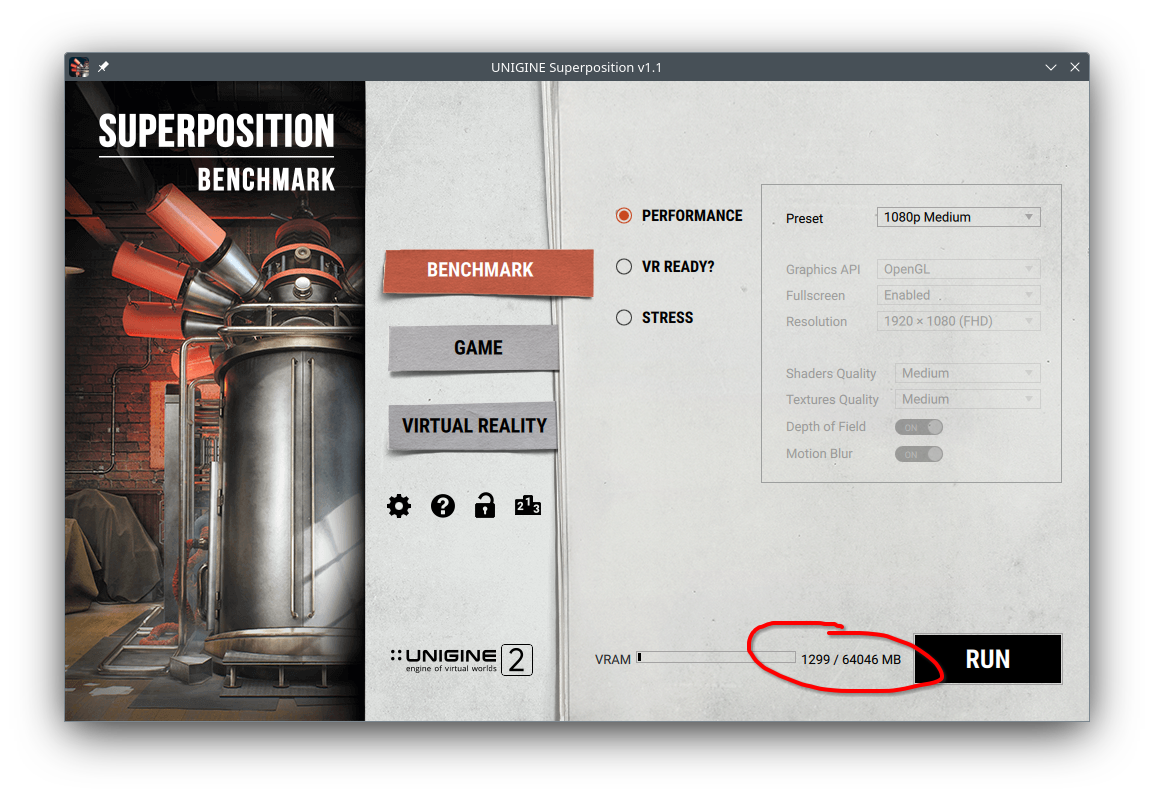
You can see in the screenshot that it shows computer RAM (64GB) and not GPU's VRAM (24GB)

This same setup works perfectly if I put NVidia GPU in the eGPU enclosure.

Any ideas? I tried connecting a DP cable directly from AMD GPU to monitor, but it works like crap with screen barely refreshing.

no comments (yet)
sorted by: hot top controversial new old
there doesn't seem to be anything here