Communick News

89 readers
2 users here now

Communick is a professional, privacy-focused service provider who supports open source and the indieweb. We support back the fediverse and the developers by pledging 20% of our yearly profits to the main development teams.

All users from this instance are expected to follow the Code of Conduct.

At the moment, only the admins can create communities. We are still figuring out what type of content we would like to provide here, but the general guideline is that we want to build a home of good discussion about culture, sports, and anything that can inspire and elevate our spirits.

Communick also provides managed hosting for Lemmy instances if you want to run your own.

For further questions, try our support.

founded 2 years ago
ADMINS
1
2


Free my boy !!

3
4
105
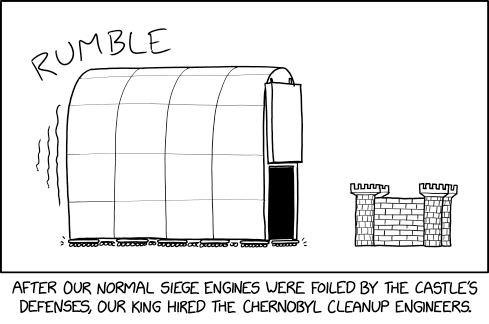
The King's Art (i.redd.it)
submitted 1 hour ago* (last edited 1 hour ago) by Beep@lemmus.org to c/comicstrips@lemmy.world
5
6
7
 
 
8


Press photographers were reportedly barred from Pentagon press briefings after Pete Hegseth‘s staff became irked over unflattering photos of the defense secretary. The office of the notoriously vain Cabinet member — a former Fox News host who had a hair and makeup studio built in the Pentagon shortly after being confirmed — should probably have more important things on his mind, chiefly the war in Iran, and, perhaps, the elementary school there that the United States appears to have bombed.

According to a Wednesday report from The Washington Post, press pool photographers were banned from briefings on March 4 and March 10 after taking and publishing what sources described as “unflattering” images of Hegseth. The Post noted that the White House had declined to comment on the decision to exclude the photographers. The White House took exception, with Deputy Press Secretary Anna Kelly sharing an email reply to the publication with an off-topic quip over the newspaper’s recent layoff of more than 300 journalists, but no actual response to the Post’s question about the concern over Hegseth’s image.

The National Press Club responded on Wednesday, with President Mark Schoeff Jr. writing that the Pentagon’s decision “is deeply troubling and runs counter to the fundamental principles of transparency in a democratic society,” adding that “when the government decides which images the public is allowed to see, transparency is replaced by control.” PEN America also responded, calling the decision to bar photographers a “petty act of retaliation.”

9


I have three networked Win10/11 PCs at our small family business that occasionally need to be accessed and maintained from my Fedora PC at home. I’ve used Google Remote Desktop for a while but it’s unreliable and also F Google.

Was looking at the Gl-Inet Comet products which look promising as they say they work without cloud access, but they’re a tad spendy. If it’s the best option I’m willing to drop the coin.

Are there better options?

Thanks!

10
11


Health Secretary Robert F. Kennedy Jr.’s relentless anti-vaccine agenda is getting reined in as Republicans warn that further attacks on lifesaving vaccines could harm the party during the midterms, according to a report by The Washington Post.

The Post reported Wednesday that Kennedy’s hand-selected committee of vaccine advisors—who share his anti-vaccine views—have abruptly abandoned plans to attack mRNA vaccines in an upcoming meeting.

The Advisory Committee on Immunization Practices (ACIP) for the Centers for Disease Control and Prevention is scheduled to meet March 18–19. While no agenda has been published for the meeting, a Federal Register notice stated that the meeting would include discussion of “COVID-19 vaccine injuries,” and may include a vote to change the CDC’s vaccine recommendations. Sources close to the committee told the Post that Kennedy’s advisors have been looking for ways to remove mRNA COVID-19 vaccines entirely from federal recommendations. And according to clearly stated goals in a meeting of Kennedy’s anti-vaccine allies earlier this week, the long-term goal is to eliminate all childhood vaccine recommendations and remove the shots from the market.

12


The key to working at a place like Ars Technica is solid news judgment. [eds note: tell that to Benj Edwards] I’m talking about the kind of news judgment that knows whether a pet peeve is merely a pet peeve or whether it is, instead, a meaningful example of the Ways that Technology is Changing our World.

The difference between the two is one of degree: A pet peeve may drive me nuts but does not appear to impact anyone else. A Ways that Technology is Changing our World story must be about something that drives a lot of people nuts.

“But where is the threshold?” I hear you asking plaintively. “It’s extremely important that I know when something crosses the line from pet peeve to important, chin-stroking journalism topic!”

Fortunately, the answer is simple. The threshold has been breached when your local public transit agency puts up a sign about the behavior in question.

Which brings me to the sign I saw yesterday in Philadelphia.

“Unless the tea is REALLY hot, keep the call off speaker,” it said.

(For those not in the US, “tea” in this context means gossip or news.)

I fucking hate speakerphone and don't use it even in my van unless a photo or document is shared during the conversation that needs to be addressed.

13


Computer Worlds is a showcase for indie computer games whose distinctiveness would make it hard for them to reach their audience. In the words of Gil Lawson, the brain behind the showcase:

There's something happening that I want to tell you about.
For the last few years, game studios across the world have been getting downsized and demolished. Massive, expensive AAA games are being met with disinterest and dispassion on release, and the culture around games has been choked by algorithm driven feeds and collapsing forum for public conversation. The mood has been a little grim.
In spite of that, though, there is a growing movement of developers often often working alone around very small teams, making beautiful, fun, strange, distinctive games that find large, enthusiastic audiences on release.
In a moment where both independent developers and massive teams are trying to hedge their bets and play it safe, these developers are swinging for the fences and finding that's what people want to play.
Those people and those games don't always have the easiest time finding one another though. The games press has been gutted, there's almost no infrastructure left for curation and criticism, and even publishers don't know how to publicize a game today.
If you want play a game in a specific genre, there's probably a steam tag for that, but if you're looking to play a game that is specifically distinctive and unique and unlike anything else, it can be hard to know where to start.
I don't think it should be that hard. So I reached out to a number of other developers working in this vein, and we did something about it ourselves. I'm very excited to show it to you. It's called Computer Worlds.

Please, take a peek for yourself! There is a treasure trove of cool games in here, including something that will probably become your personal GOTY for the coming year.

COMPUTER WORLDS - A New Showcase Celebrating Strange & Distinctive Games

14


The tech billionaire Hemant Taneja admits that AI is a bubble. In fact, he welcomes it: “Bubbles are good,” Taneja, the CEO of General Catalyst, a venture-capital firm, told me in an email. If AI comes crashing down, it will lead to “some spectacular failures,” he said—companies will go under and people will lose their jobs—but that’s a price worth paying for “enduring companies that change the world forever.”

His view is widespread in Silicon Valley. Some, such as Nvidia CEO Jensen Huang, reject the notion that their companies are overvalued. But many of the wealthiest and most powerful people in tech are embracing the idea of an AI bubble. Jeff Bezos has argued that AI might be a “good” kind of bubble. Sam Altman has made similar comments, predicting that AI will be a “huge net win for the economy” even if “a phenomenal amount of money” is lost along the way.

Indeed, a phenomenal amount of money is at stake: OpenAI, which is still far from profitable, is currently worth more than Toyota, Coca-Cola, and Disney combined. This year, Big Tech plans to spend some $650 billion on the AI build-out—a sum that far exceeds the GDP of most countries. Investors are banking that AI will spur a productivity boom and deliver unimaginable corporate profits, but that future could be far off. If the spending dries up first, the bubble could pop—perhaps dragging the rest of the economy down with it. Nonetheless, Silicon Valley thinks that the present mania will eventually pay back its returns through scientific discovery and economic growth. “Stop trying to make bubbles go away,” as the entrepreneur James Thomason recently wrote. “The benefits of innovation outweigh the costs of volatility.” In other words: Be grateful for the bubble.

15


Today I spent a while to fix a problem with my DualSense controller that really annoyed me for a while now, but I never found the time to fix. (disclaimer: summary was created by AI)

After restarting my openSUSE system, my DualSense controller would connect via Bluetooth but wasn’t recognized as a gamepad. It only worked after unplugging and replugging the Bluetooth dongle (ASUS USB-BT500).

Cause: The Bluetooth dongle wasn’t initializing correctly after a reboot. While the controller could establish a Bluetooth connection, it wasn’t registering as an input device (/dev/input/by-id/). Only after manually resetting the dongle (by unplugging and replugging it) would the connection stabilize.

Solution: I created a udev rule to automatically reset the dongle after every reboot, ensuring proper initialization. This fixed the issue, and the controller is now reliably detected.

The udev rule:

ACTION=="add", SUBSYSTEM=="usb", ATTRS{idVendor}=="0b05", ATTRS{idProduct}=="190e", RUN+="/usr/bin/hciconfig hci1 reset"

(Replace 0b05:190e with your dongle’s ID from lsusb.)

After creating the rule with sudo nano /etc/udev/rules.d/99-bt-dongle-reset.rules and reloading udev (sudo udevadm control --reload-rules && sudo udevadm trigger), the controller now works immediately after boot.

Maybe this is helpful for somebody facing a similar issue. Or you can tell me, why this solution is a bad idea and why I should not listen to AI.

16
17


Last month, the New York Attorney General (NYAG) brought a lawsuit against Valve accusing the company of promoting “illegal gambling” through its randomized in-game loot boxes. On Wednesday, Valve issued its first public comment on the case, comparing its digital loot boxes to randomized real-world purchases like blind-bagged toys or packs of trading cards.

“Generations have grown up opening baseball card packs and blind boxes and bags, and then trading and selling the items they receive,” Valve wrote. “On the physical side, popular products used in this way include baseball cards, Pokemon, Magic the Gathering, and Labubu.”

Though that may seem like an apt comparison on the surface, Valve’s loot boxes differ from these real-world examples in large part because of Valve’s control of the Steam Marketplace, which serves as the only legitimate way to exchange or resell those items. While owners of real-world items are free to trade or sell them however they want, Valve has cracked down on many third-party sites that enable the exchange of in-game items—especially when those items are used as glorified chips for gambling games.

Lawyers told Ars last month that Valve’s control of that marketplace—and its 15 percent commission on item resale—helps establish the inherent economic value of the randomized items it sells, both to players and to Valve itself. That could be a crucial legal element in a courtroom in turning a mere “random purchase” into legally defined “gambling.”

18


I built this game. I know every mechanic, every exploit, every hidden interaction.

And my 10-year-old still destroys me.

Not sometimes—usually. She knows the timing windows better than I do. Found combos I didn't design (but somehow work). Beats me with strategies I never considered.

Then there's my 7-year-old. Smaller, less experience, should be easy pickings. Except sometimes—sometimes—they wipe the floor with both of us.

The funny thing? This is exactly what I wanted.

I didn't build a game where the designer always wins. I built one where the person who adapts fastest wins. Age doesn't matter. Experience doesn't matter.

When your kid beats you fair and square and the room erupts. When the youngest surprises everyone.

That's the whole point.

19


March 6, 2026

The day that will be remembered as one of the darkest days of the long and troubled US-Cuban relationship is 29 January. That was the day that Donald Trump declared Cuba an “unusual and extraordinary threat” to US national security, introduced a full-scale fuel blockade around the island, and turned off the lights for their home, schools and hospitals.

For Cubans Americans like me, the consequences of Trump’s declaration are not abstract. They are immediate, and devastating. Our families are running out of food. Our friends are unable to access medicine. While Marco Rubio, the secretary of state, speaks in the name of our “freedom”, he actively starves our communities of their most basic needs.

20
 
 
21


Who should be directly liable for online infringement – the entity that serves it up or a user who embeds a link to it? For almost two decades, most U.S. courts have held that the former is responsible, applying a rule called the server test. Under the server test, whomever controls the server that hosts a copyrighted work—and therefore determines who has access to what and how—can be directly liable if that content turns out to be infringing. Anyone else who merely links to it can be secondarily liable in some circumstances (for example, if that third party promotes the infringement), but isn’t on the hook under most circumstances.

The test just makes sense. In the analog world, a person is free to tell others where they may view a third party’s display of a copyrighted work, without being directly liable for infringement if that display turns out to be unlawful. The server test is the straightforward application of the same principle in the online context. A user that links to a picture, video, or article isn’t in charge of transmitting that content to the world, nor are they in a good position to know whether that content violates copyright. In fact, the user doesn’t even control what’s located on the other end of the link—the person that controls the server can change what’s on it at any time, such as swapping in different images, re-editing a video or rewriting an article.

But a news publisher, Emmerich Newspapers, wants the Fifth Circuit to reject the server test, arguing that the entity that embeds links to the content is responsible for “displaying” it and, therefore, can be directly liable if the content turns out to be infringing. If they are right, the common act of embedding is a legally fraught activity and a trap for the unwary.

Suing your readers always ends well.

22


i - i - shivers i might not be able to help myself does weird arm movements i-iii ii ---- i might need this, i might need it for myself yesyes, its such a - its such a fun and intellectually stimulating project to work on and andand it would be my first "real project i could show" andandand it would totally be worth the hate on lemmy and ---- and i gotta do sooomething riiiight so i better do something that is fun--- and video games feel like more of a chore and watching yt feels even worse sooo this is totally valid yesyes im not evil and also this is not consumerism so its good clearly and also this is good

it would - it would - it would be the perfect portfolio piece, wouldn't it beeee? yesssss- that is it. that must be it- my saving grace- my magnum opus- the one thing i can point to and say "i made a full thing and it works and is better than most" yesssss-----

surely this will clear my head of those foul thoughts and let me focus on what i truly care about afterwards, certainly infact!

* notesource image taken from here

blahaj zone image link

context for anyone who caresi used to work on some Godot Game Engine specific agent. yes, those bs "ai agents" you hear shilled about on twitter or whatever.

i loved working on it! its fun implementing complex text parsers to read text tokens to take action within Godot to then return to the agent so it can see what to do next.

it was a great project i just - i loved it. its still on git, heres an unfinished "ad" i wanted to post on full release but also scrapped cuz i wanted to "get away from the bubble"... oh well.

but - oh surprise: people hate "ai". and i agree. image, video, audio, blog post generation stuff is obviously bs and like.... just awful and stuff-

but oh boy did i have fun making that agent.... even just the UX, i was really proud of it, since it was all my doing.

but i let it down. i put it to rest during a ceramony in the matrix 196 chat, where i layed flowers on its grave.

but now... i am getting the itch.. the itch to continue.
for more than a year now i tried to ignore the urge, all the ideas i got to improve the systems, rewrite them to be.... better and more maintainable, apply new knowledge i had learned about skill.md... i think about them almost each night before going to sleep and im not kidding.

maybe - just maybe - actually fully finishing the project with a satisfying oomph im done would get those thoughts out of my head.

23


In the three decades between 1993 and 2024, measles in the US was relatively rare—a few hundred cases each year, at most. But suddenly, the disease has become so entrenched in American life that it sometimes fails to make headlines when a new outbreak erupts.

As of March 2026, measles has been continuously circulating around the US for more than a year, starting with an outbreak in Texas that lasted from January to August 2025. Before that outbreak was declared over, an outbreak on the Utah and Arizona border began in August and is ongoing. An outbreak in South Carolina began in September, drastically increased in January 2026, and continues.

Thirty states have had measles cases this year; 47 have seen cases since the start of 2025. Health officials across the US have confirmed 1,300 infections already this year as of March 6, putting the country on track to surpass 2025’s numbers, which were the highest in 35 years.

We study outbreak preparedness and response at Brown University’s Pandemic Center, and we view the return of measles in the US as a grim signal of what’s to come.

Low levels of vaccination across the country mean measles outbreaks will continue to occur, needlessly hospitalizing and killing the unvaccinated. But beyond these harms, the disease’s resurgence serves as a serious warning about the country’s capacity to manage infectious disease threats of all kinds.

24
25
 
 
view more: next ›