politics
Welcome to the discussion of US Politics!
Rules:
- Post only links to articles, Title must fairly describe link contents. If your title differs from the site’s, it should only be to add context or be more descriptive. Do not post entire articles in the body or in the comments.
Links must be to the original source, not an aggregator like Google Amp, MSN, or Yahoo.
Example:
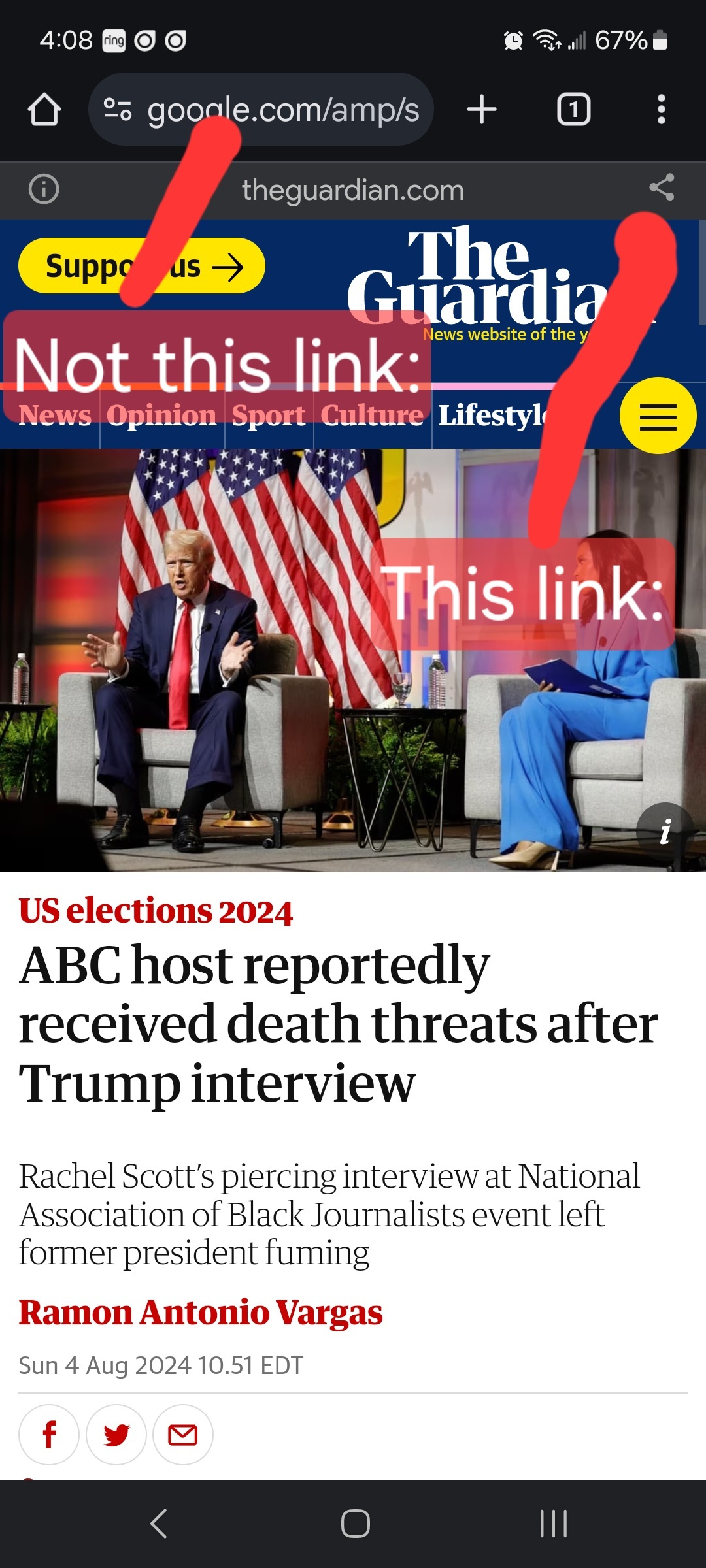
- Articles must be relevant to politics. Links must be to quality and original content. Articles should be worth reading. Clickbait, stub articles, and rehosted or stolen content are not allowed. Check your source for Reliability and Bias here.
- Be civil, No violations of TOS. It’s OK to say the subject of an article is behaving like a (pejorative, pejorative). It’s NOT OK to say another USER is (pejorative). Strong language is fine, just not directed at other members. Engage in good-faith and with respect! This includes accusing another user of being a bot or paid actor. Trolling is uncivil and is grounds for removal and/or a community ban.
- No memes, trolling, or low-effort comments. Reposts, misinformation, off-topic, trolling, or offensive. Similarly, if you see posts along these lines, do not engage. Report them, block them, and live a happier life than they do. We see too many slapfights that boil down to "Mom! He's bugging me!" and "I'm not touching you!" Going forward, slapfights will result in removed comments and temp bans to cool off.
- Vote based on comment quality, not agreement. This community aims to foster discussion; please reward people for putting effort into articulating their viewpoint, even if you disagree with it.
- No hate speech, slurs, celebrating death, advocating violence, or abusive language. This will result in a ban. Usernames containing racist, or inappropriate slurs will be banned without warning
We ask that the users report any comment or post that violate the rules, to use critical thinking when reading, posting or commenting. Users that post off-topic spam, advocate violence, have multiple comments or posts removed, weaponize reports or violate the code of conduct will be banned.
All posts and comments will be reviewed on a case-by-case basis. This means that some content that violates the rules may be allowed, while other content that does not violate the rules may be removed. The moderators retain the right to remove any content and ban users.
That's all the rules!
Civic Links
• Congressional Awards Program
• Library of Congress Legislative Resources
• U.S. House of Representatives
Partnered Communities:
• News
view the rest of the comments
The trolley problem is a philosophical thought experiment designed to examine differences in schools of moral philosophy and of people's moral intuitions. It's not necessarily about demonstrating that you have to live with the consequences of the choice.
The problem with it comes when people assume that the act utilitarian answer is objectively correct, and that it is broadly applicable to real world problems even when there are huge differences. At that point the trolley problem stops serving as a tool to explore moral philosophy and becomes a rhetorical tool to justify and feel better about throwing people under the bus.
Another thought experiment designed to critique this perspective is as follows: while travelling through the woods, you come across a group of armed men holding prisoner a group of people who were protesting their regime. The leader of the armed men says that if you take a gun and kill one of them yourself, he'll let the rest go, but otherwise, he'll kill all of them. From the perspective of act utilitarianism, or trolley problem thinking, taking the offer is morally obligatory.
The problem with that is that you can be manipulated into causing harm by a malevolent actor. All they have to do is threaten some greater harm, and you become their tool, which can increase their power and their ability to threaten larger harm. "You must go out and kill one person, or I will command another of my agents to go out and kill three." This essentially precludes standing up to any powerful entity in any meaningful way.
Refusing to kill one of the hostages, or pull the lever to run over Palestinians, leaves open the possibility of forming a united front to defeat the people forcing us into such situations in the first place. Keeping one's own hands clean is not simply a matter of "moral purity," but rather, an intentional strategy of avoiding actions taken against a particular group.
We can imagine a trolley problem where on the switched track is a foreign diplomat who, if killed, will cause an alliance between two countries to fail, leaving them both vulnerable to a third, and making it essential to save them. This is the hidden cost of pulling the lever to sacrifice Palestinians. But it goes beyond their specific value as allies, it also tells other allies that they can be sacrificed in the same way. In this case, it is better to accept a future where an external force commits a greater immediate harm than to commit a smaller immediate harm ourselves but which jeopardizes alliances and solidarity.
No, those are separate problems, not the trolley problem.
Yes, they are separate problems that highlight problems with trying to apply the logic of pulling the lever more broadly to other circumstances.