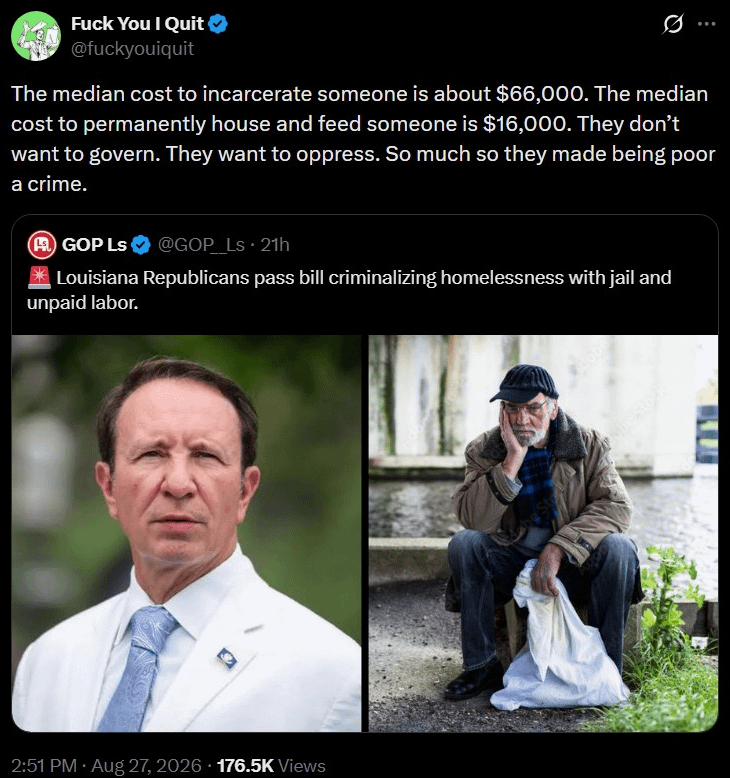
this post was submitted on 29 Aug 2026
794 points (99.4% liked)
Work Reform
17362 readers
3120 users here now
A place to discuss positive changes that can make work more equitable, and to vent about current practices. We are NOT against work; we just want the fruits of our labor to be recognized better.
Our Philosophies:
- All workers must be paid a living wage for their labor.
- Income inequality is the main cause of lower living standards.
- Workers must join together and fight back for what is rightfully theirs.
- We must not be divided and conquered. Workers gain the most when they focus on unifying issues.
Our Goals
- Higher wages for underpaid workers.
- Better worker representation, including but not limited to unions.
- Better and fewer working hours.
- Stimulating a massive wave of worker organizing in the United States and beyond.
- Organizing and supporting political causes and campaigns that put workers first.
founded 3 years ago
MODERATORS
you are viewing a single comment's thread
view the rest of the comments
view the rest of the comments
Nor is the fact mentioned that most prisons in the U.S. are run by and as for-profit private companies.
That is why so many people are incarcerated in the U.S., and unpaid slave labor is part of this multibillion-dollar business.
It is a business that, for entirely obvious reasons, no other democracy in the world allows in this absurd form—only the U.S., the "Land of the Free."
Most? I'm gonna need a source for that cause unless that's changed recently, they've been mostly public prisons.
You're right that only a minority of inmates are held in private facilities:
Source
However, this does nothing to make the fact that private individuals profit from the incarceration of people any better. This practice could hardly be more unethical or counterproductive, as it creates a financial incentive to incarcerate as many people as possible—and it is obvious that this runs counter to the social purpose of prisons.