this post was submitted on 02 Aug 2024
801 points (96.6% liked)
Selfhosted
60409 readers
510 users here now
A place to share alternatives to popular online services that can be self-hosted without giving up privacy or locking you into a service you don't control.
Rules:
-
Be civil.
-
No spam.
-
Posts are to be related to self-hosting.
-
Don't duplicate the full text of your blog or readme if you're providing a link.
-
Submission headline should match the article title.
-
No trolling.
-
Promotion posts require active participation, with an account that is at least 30 days old. F/LOSS without a paywall has exceptions, with requirements. See the rules link for details.
Resources:
- selfh.st Newsletter and index of selfhosted software and apps
- awesome-selfhosted software
- awesome-sysadmin resources
- Self-Hosted Podcast from Jupiter Broadcasting
Any issues on the community? Report it using the report flag.
Questions? DM the mods!
founded 3 years ago
MODERATORS
you are viewing a single comment's thread
view the rest of the comments
view the rest of the comments
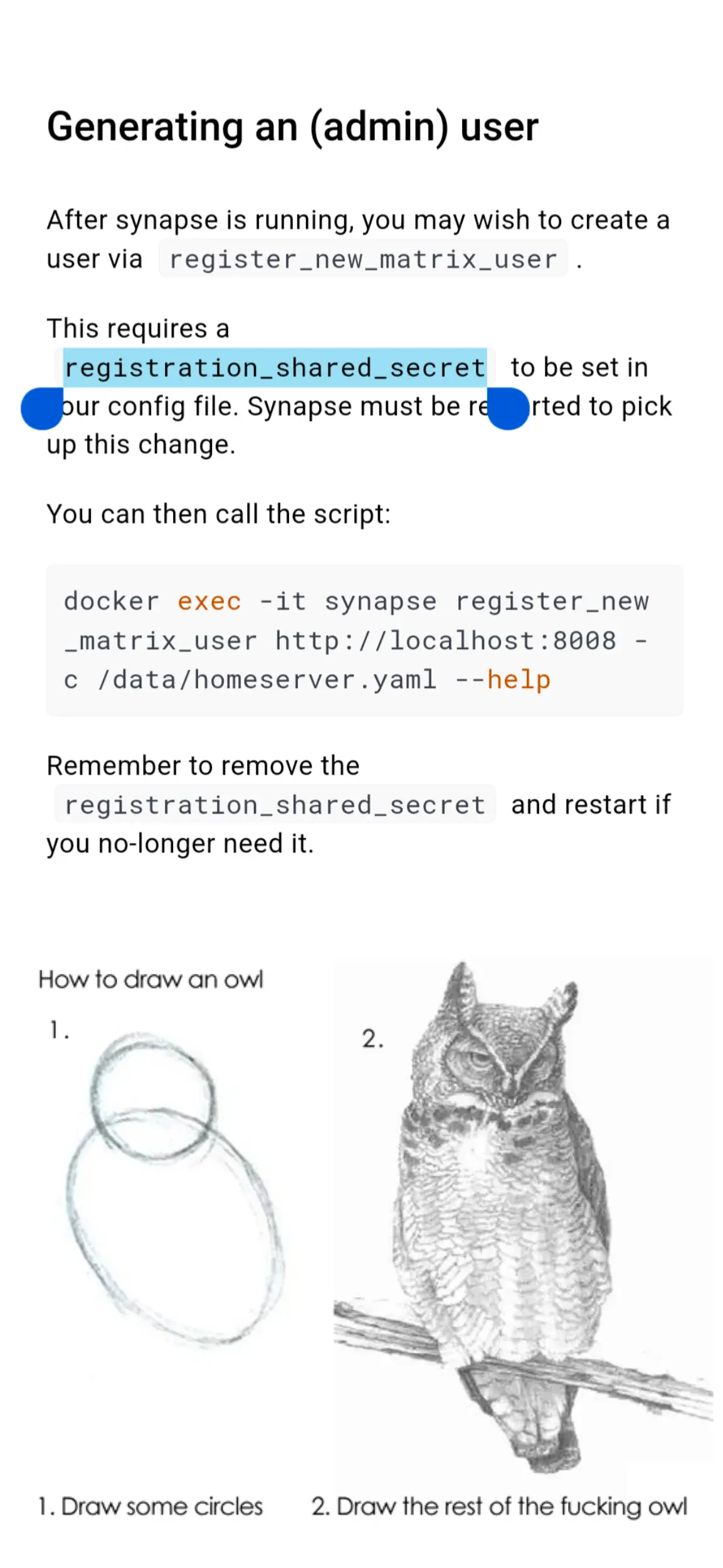
I don't know about that. I've read some terrible documentation that had everything under the sun. Right now in the library I'm using, the documentation has every available class, every single method, what it's purpose.
But how to actually use the damn thing? I have to look up blog posts and videos. I actually found someone's website that had notes about various features that are better than the docs.
There's a delicate balance of signal vs noise.
yeah, it also helps knowing how to use the thing, but i consider that to be "basic documentation" personally.
Knowing how to set something up is nice, but knowing how to use it properly after setting it up is even nicer.