politics
Welcome to the discussion of US Politics!
Rules:
- Post only links to articles. Title must fairly describe link contents. If your title differs from the site’s, it should only be to add context or be more descriptive. Do not post entire articles in the body or in the comments.
Links must be to the original source, not an aggregator like Google Amp, MSN, or Yahoo.
Example:
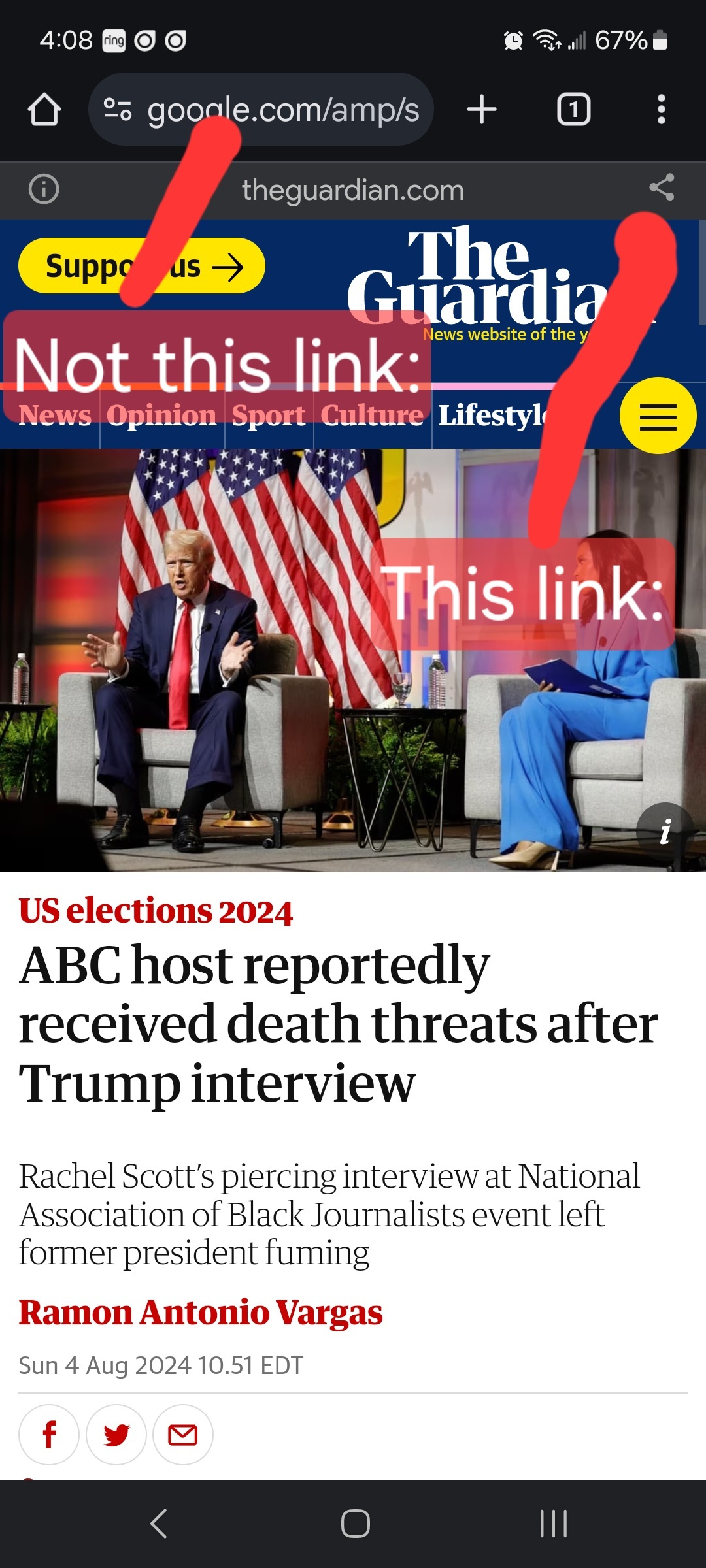
- Articles must be relevant to US politics and contain quality and original content. Social Media adjacent hosts like Substack are allowed, but ONLY if they tie back to a company/subsidiary. No personal or friend group blogs and no self-promotion. Articles should be worth reading. Clickbait, stub articles, and re-hosted or stolen content are not allowed. Check your source for Reliability and Bias here.
- Be civil, No violations of TOS. It’s OK to say the subject of an article is behaving like a (pejorative, pejorative). It’s NOT OK to say another USER is (pejorative). Strong language is fine, just not directed at other members. Engage in good-faith and with respect! This includes accusing other users of being bots or paid actors.
- No memes, trolling, misinformation, or low-effort posts/comments (including reposts). If you see posts like this that anger you, do not engage. Report, block, and live a happier life than they do. Any slap-fight is subject to comment removals. Fights full of rule violations will result in temporary bans to cool off.
- No manipulating votes via bots or alt accounts; this will result in permanent bans. Vote based on comment quality, not agreement. This community aims to foster discussion; please reward people for putting effort into articulating their viewpoint, even if you disagree with it.
- No hate speech, slurs, celebrating death, advocating violence, or abusive language. This will result in an account ban. Usernames containing racist, or inappropriate slurs will be permanently banned.
We ask that the users report any comment or post that violate the rules and use critical thinking when reading, posting, and commenting. Users that repeatedly have comments or posts removed, weaponize reports, or violate the code of conduct, will be banned.
All posts and comments will be reviewed on a case-by-case basis. This means that some content that violates the rules may be allowed, while other content that does not violate the rules may be removed. The moderators retain the right to remove any content and ban users. The reason(s) behind moderator action(s) are publicly available through the Modlog.
That's all the rules!
Civic Links
• Congressional Awards Program
• Library of Congress Legislative Resources
• U.S. House of Representatives
Partnered Communities:
• News
view the rest of the comments
I think thats awfully simplistic but if you can point me to some source that goes into the details of what you are predicting I'd be happy to read it.
Always fair to ask for sources, but what exactly do you want to see here? Or what part are you contesting?
The lack of specificity. They already replied with more detail and I largely agree, although I simply dont think its a permanent harm if nonessential goods rise in price and then drop over a period of a year or two.
Not sure if this is at all what you are asking for, but here goes:
As to the first bit I won't provide as many sources as I'm not finding many that bring it all together in an understandable way, it's basic economics of supply and demand. Here's a video that explains some of the basics of supply, demand, and tariffs (it's a bit jargon-filled, but I'm not finding much that strikes a good balance between understandability and oversimplification: https://youtu.be/3pSysspeCxY?si=6IIGFVuaTyObq5sl
In addition to the usual supply and demand changes that Tariffs bring, throughout the 80s, 90s, and 2000s a lot of US manufacturing was moved out of the country, to countries with cheaper labor. Often physically transporting the production line equipment from the US to China where labor was cheaper. So in most of those instances, our local production capability was reduced, and getting it back will require rebuilding it from the ground up (which oftentimes takes years). And that's industries where we have the natural resources (and harvesting/mining facilities) to supply local manufacturing, where we have to spin those industries back up it could take longer.
Moving on to the trade leverage with China. I'll try not to get too bogged-down with the history, but the US is China's biggest "customer" in percentage of their exports bought. But considering our rivalry, they've been wanting to change this for years, and are making good progress in becoming less dependent on the US buying their exports. In 2004, the US bought 21% of China's exports https://wits.worldbank.org/CountryProfile/en/Country/CHN/Year/2004/Summarytext and in 2023, even though the US imported more from China than 20 years ago, we only bought ~15% of their exports https://tradingeconomics.com/china/exports-by-country - we're still their largest trade partner, but they have done a lot of work to be less-dependent on US trade.
Along with this, there's also a bit of a rivalry between the G7 (America, Canada, France, Germany, Italy, Japan and the UK) and BRICS (Brasil, Russia, India, China and South Africa). There's a lot of complicated geopolitics in this, but the part that's relevant to trade is that the GDP of those nations has now surpassed the G7 nations: Here is a graph comparing the GDP of the G7 to BRICS countries over time. https://en.m.wikipedia.org/wiki/BRICS#/media/File%3ABRICS_AND_G7.svg Essentially China now has other friends, that go to a different school (and they're actually real). And their new friends have money, want what China's selling, and aren't as likely to try to tell China what to do.
With regard specifically to the US relationship with China there is this from Biden's Tariffs from 6 months ago which contrasts China's response now to their response in 2018 when we had more trade leverage. https://www.reuters.com/markets/what-doesnt-kill-you-makes-you-stronger-china-trolls-new-us-tariffs-2024-05-15/
Here is a more recent article where a Chinese official says the the tariffs will backfire on the US https://apnews.com/article/china-economy-tariffs-us-commerce-trump-843769cd7175011d8e34be32cc8d045f
On one hand, less dependence on Chinese manufacturing by the US might be a good thing (one example I've seen of this is as drone warfare becomes more common, the US being reliant on China manufacturing the batteries isn't ideal). But there's a smart way to go about it (things like the CHIPS act that incentivize industries to move manufacturing to the US). If we don't get manufacturing back before implementing tariffs we won't have enough local supply to meet demand and prices across the board will go up.
I think I agree with all that, although I dont think China or America needs each other at this point.
I agree it would be ideal to have things prepared for when tariffs hit and companies are free to do that. They have some lead time now, and they could have prepared plans for this in advance as well.
If prices do go up, it will be because most companies choose to raise the price and/or drag their feet. People are increasingly critical of corporations these days, I dont think they will get off as easy as last time.