this post was submitted on 08 Jan 2025
570 points (94.4% liked)
Selfhosted
61790 readers
652 users here now
A place to share alternatives to popular online services that can be self-hosted without giving up privacy or locking you into a service you don't control.
Rules:
-
Be civil.
-
No spam.
-
Posts are to be related to self-hosting.
-
Don't duplicate the full text of your blog or readme if you're providing a link.
-
Submission headline should match the article title.
-
No trolling.
-
Promotion posts require active participation, with an account that is at least 30 days old. F/LOSS without a paywall has exceptions, with requirements. See the rules link for details. Tags [CBH] or [AIP] are required, see the links in Rule 8 for details.
-
AI-related discussions and AI-involved promotional posts have additional requirements for tagging, as noted in Rule 7 and the AI & Promotional Post Expanded Rules post, and find example disclosures here.
Resources:
- selfh.st Newsletter and index of selfhosted software and apps
- awesome-selfhosted software
- awesome-sysadmin resources
- Self-Hosted Podcast from Jupiter Broadcasting
Any issues on the community? Report it using the report flag.
Questions? DM the mods!
founded 3 years ago
MODERATORS
you are viewing a single comment's thread
view the rest of the comments
view the rest of the comments
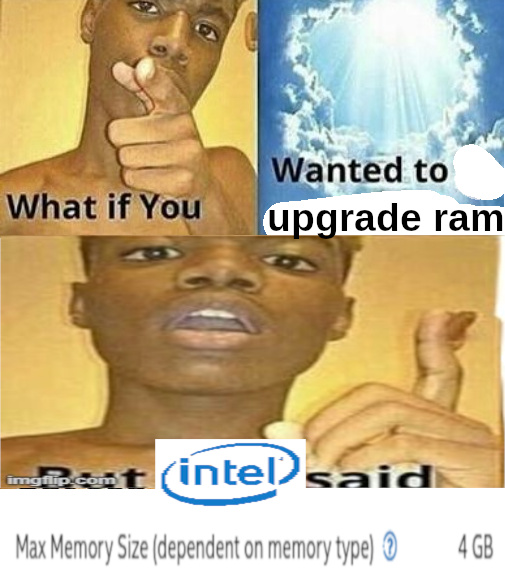
I started my self hosting journey on a Dell all-in-one PC with 4 GB RAM, 500 GB hard drive, and Intel Pentium, running Proxmox, Nextcloud, and I think Home Assistant. I upgraded it eventually, now I'm on a build with Ryzen 3600, 32 GB RAM, 2 TB SSD, and 4x4 TB HDD
My first server was a single-core Pentium - maybe even 486 - desktop I got from university surplus. That started a train of upgrading my server to the old desktop every 5-or-so years, which meant the server was typically 5-10 years old. The last system was pretty power-hungry, though, so the latest upgrade was an N100/16 GB/120 GB system SSD.
I have hopes that the N100 will last 10 years, but I'm at the point where it wouldn't be awful to add a low-cost, low-power computer to my tech upgrade cycle. Old hardware is definitely a great way to start a self-hosting journey.