this post was submitted on 14 Jun 2026
221 points (98.3% liked)

Climate

8733 readers
124 users here now

Discussion of climate, how it is changing, activism around that, the politics, and the energy systems change we need in order to stabilize things.

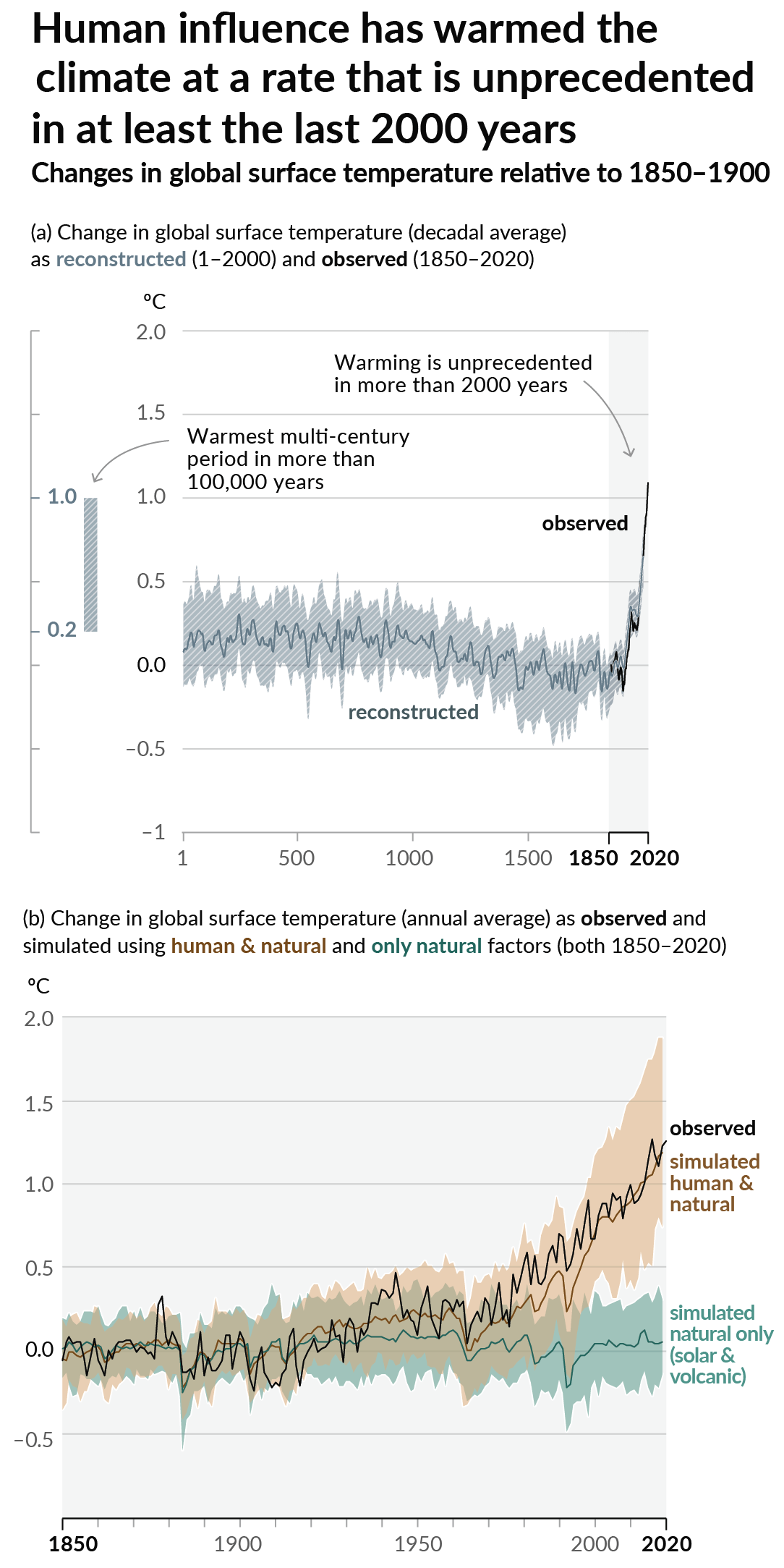
As a starting point, the burning of fossil fuels, and to a lesser extent deforestation and release of methane are responsible for the warming in recent decades: Graph of temperature as observed with significant warming, and simulated without added greenhouse gases and other anthropogentic changes, which shows no significant warming
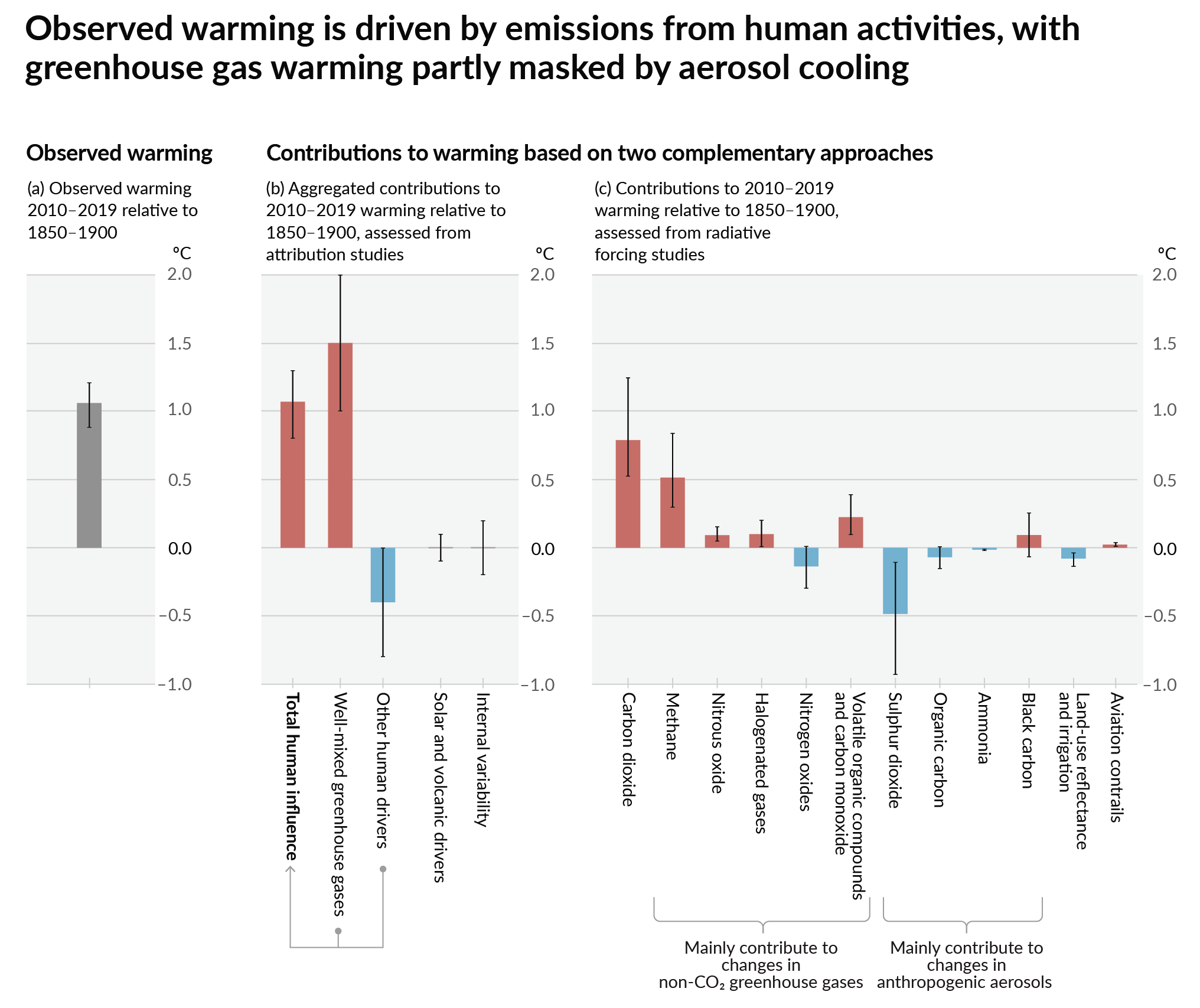
How much each change to the atmosphere has warmed the world: IPCC AR6 Figure 2 - Thee bar charts: first chart: how much each gas has warmed the world.  About 1C of total warming.  Second chart:  about 1.5C of total warming from well-mixed greenhouse gases, offset by 0.4C of cooling from aerosols and negligible influence from changes to solar output, volcanoes, and internal variability.  Third chart: about 1.25C of warming from CO2, 0.5C from methane, and a bunch more in small quantities from other gases.  About 0.5C of cooling with large error bars from SO2.
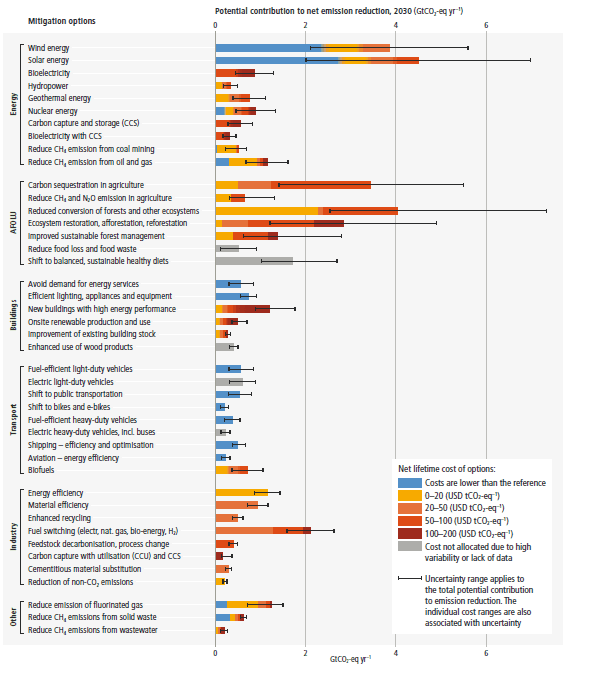
Recommended actions to cut greenhouse gas emissions in the near future:
Anti-science, inactivism, and unsupported conspiracy theories are not ok here.

founded 3 years ago
MODERATORS
 

In multiple ways, we are seeing the end of the oil age.

Change is coming.

you are viewing a single comment's thread
view the rest of the comments
[–] ltxrtquq@lemmy.ml 12 points 3 days ago

RASCOE: And people around the world are facing higher fuel prices and inflation because of the war in Iran. Could Venezuela help fill that gap? Like, does it have the capability to do that?

VIGIL: If you take a step back and look at the global oil picture, what Venezuela is producing, which is just over a million barrels per day, is a very small amount of the global oil demand. So it's about 1%, even though for Venezuela, it is a lot. Like you mentioned earlier, it's a seven-year high. But because it is such a small amount, it's not going to meaningfully change the shortages because of the war in Iran.

Before the war, 20 million barrels of oil passed daily through the Strait of Hormuz, the narrow waterway off Iran’s southern coast. That amount has plunged to “a trickle,” the I.E.A. said in its monthly report, since Iran warned that ships passing through were at risk of attack.

I don't know exactly how much oil per day the Iran War has prevented, but it seems like Venezuela can't cover all the losses. The NPR article says most of their oil is going to the US and India if you're still curious about that.