politics
Welcome to the discussion of US Politics!
Rules:
- Post only links to articles, Title must fairly describe link contents. If your title differs from the site’s, it should only be to add context or be more descriptive. Do not post entire articles in the body or in the comments.
Links must be to the original source, not an aggregator like Google Amp, MSN, or Yahoo.
Example:
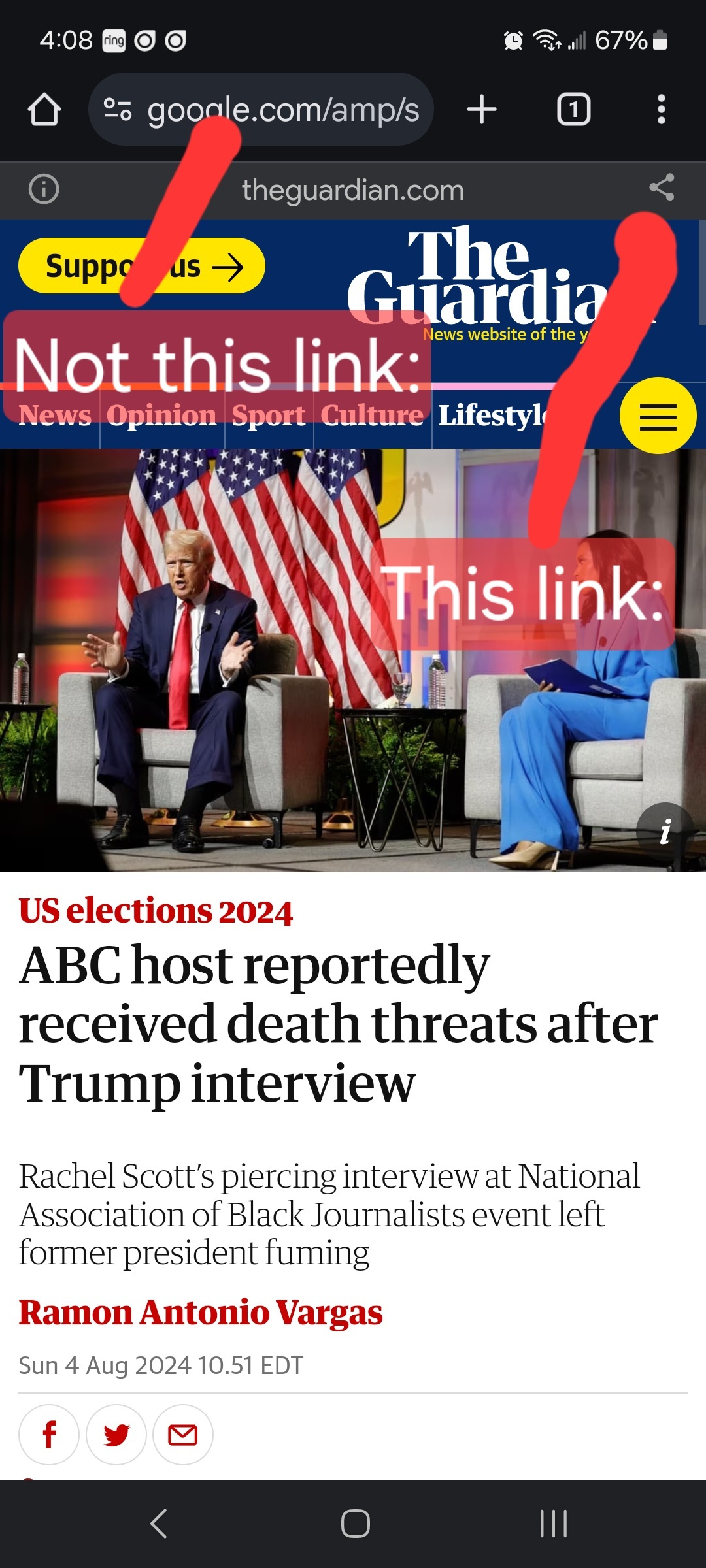
- Articles must be relevant to politics. Links must be to quality and original content. Articles should be worth reading. Clickbait, stub articles, and rehosted or stolen content are not allowed. Check your source for Reliability and Bias here.
- Be civil, No violations of TOS. It’s OK to say the subject of an article is behaving like a (pejorative, pejorative). It’s NOT OK to say another USER is (pejorative). Strong language is fine, just not directed at other members. Engage in good-faith and with respect! This includes accusing another user of being a bot or paid actor. Trolling is uncivil and is grounds for removal and/or a community ban.
- No memes, trolling, or low-effort comments. Reposts, misinformation, off-topic, trolling, or offensive. Similarly, if you see posts along these lines, do not engage. Report them, block them, and live a happier life than they do. We see too many slapfights that boil down to "Mom! He's bugging me!" and "I'm not touching you!" Going forward, slapfights will result in removed comments and temp bans to cool off.
- Vote based on comment quality, not agreement. This community aims to foster discussion; please reward people for putting effort into articulating their viewpoint, even if you disagree with it.
- No hate speech, slurs, celebrating death, advocating violence, or abusive language. This will result in a ban. Usernames containing racist, or inappropriate slurs will be banned without warning
We ask that the users report any comment or post that violate the rules, to use critical thinking when reading, posting or commenting. Users that post off-topic spam, advocate violence, have multiple comments or posts removed, weaponize reports or violate the code of conduct will be banned.
All posts and comments will be reviewed on a case-by-case basis. This means that some content that violates the rules may be allowed, while other content that does not violate the rules may be removed. The moderators retain the right to remove any content and ban users.
That's all the rules!
Civic Links
• Congressional Awards Program
• Library of Congress Legislative Resources
• U.S. House of Representatives
Partnered Communities:
• News
view the rest of the comments
For international readers, if the story stops at this paragraph:
On balance, Iran emerges the strategic winner of the four-month war. It did suffer substantial losses, including much of its navy, air force, military-industrial capacity and political leadership, including Ayatollah Ali Khamenei, the supreme leader, who was killed on the war’s first day. With the war ending, however, Iran’s leadership can begin rebuilding.
The story continues:
The United States, for its part, looks weaker in the eyes of the world. The American military has shown itself unable to quash a much smaller opponent even as it burned through many of its long-range precision missiles and interceptors. The outcome damages this country’s ability to deter other potential adversaries. To begin to repair the damage, the United States would be wise to mend alliances in Europe, the Middle East and Asia that have been frayed by the war’s military and economic effects. The Pentagon will also need to modernize and prepare for the wars of the future. Neither is likely to happen under President Trump.
Before the American and Israeli attack began on Feb. 28, Iran’s leadership had endured a miserable two and a half years. The government was far weaker than it had been before the Oct. 7, 2023, attack on Israel by Hamas, which Iran has long funded and advised. In response to that attack, Israel significantly diminished Hamas and Hezbollah, another Iranian proxy group. In Syria, a murderous, Iran-backed dictator fell while Iran’s leaders did little to save him. Israel and the United States exposed Iran’s air defenses and missile program as paper tigers when they bombed Iranian nuclear sites last summer, setting back its program. All the while, Iran’s currency continued to plummet, and its economy was in ruins. Starting late last year, Iranians took to the streets to protest, and the regime responded by killing thousands of them, if not tens of thousands.
All these problems remain, and Iran is still weaker than it was three years ago. But the war has given it leverage it did not have when 2026 began. Its regime has demonstrated that it can survive waves of attacks from its two biggest enemies. Its leaders have not had to abandon their nuclear ambitions. And they have learned that the rest of the world seems unwilling to use military force to reopen the Strait of Hormuz. If Iran chooses to close the strait at some point in the coming months or years, what will Mr. Trump do in response?
We lay out these facts with no pleasure. Iran has been and remains a force for ill. It represses its own people, especially political dissidents, women, L.G.B.T.Q. people and religious minorities. It is a world leader in torture and executions, and it has financed terrorism in its region and far beyond. Iran’s leaders have impoverished a country where per capita income was above the global average as recently as the 1970s.
The regime’s distinct brutality should have been reason for the United States to think carefully and plan cautiously for any war. The history of modern American wars, particularly in Iran’s region, is full of hubris that incubated defeat. Yet Mr. Trump eschewed thoughtful planning at every step.
He accepted the rose-colored assessment of Prime Minister Benjamin Netanyahu of Israel, who predicted that the Iranian regime would quickly fall. Mr. Trump dismissed the views of his aides who told him that Mr. Netanyahu’s forecast was farcical. Mr. Trump ignored the Constitution and refused to seek congressional approval for the war. He did not listen to European and Asian allies who opposed his war. He failed to plan for Iran’s obvious ability to close the Strait of Hormuz. He made threats about destroying Iranian civilization that succeeded only in diminishing America’s moral standing.