this post was submitted on 04 Jan 2026
-45 points (9.1% liked)

General Discussion

13898 readers
1 users here now

Welcome to Lemmy.World General!

This is a community for general discussion where you can get your bearings in the fediverse. Discuss topics & ask questions that don't seem to fit in any other community, or don't have an active community yet.


🪆 About Lemmy World


🧭 Finding CommunitiesFeel free to ask here or over in: !lemmy411@lemmy.ca!

Also keep an eye on:

For more involved tools to find communities to join: check out Lemmyverse!


💬 Additional Discussion Focused Communities:


Rules and Policies

Remember, Lemmy World rules also apply here.0. See: Rules for Users.

  1. No bigotry: including racism, sexism, homophobia, transphobia, or xenophobia.
  2. Be respectful. Everyone should feel welcome here.
  3. Be thoughtful and helpful: even with ‘silly’ questions. The world won’t be made better by dismissive comments to others on Lemmy.
  4. Link posts should include some context/opinion in the body text when the title is unaltered, or be titled to encourage discussion.
  5. Posts concerning other instances' activity/decisions are better suited to !fediverse@lemmy.world or !lemmydrama@lemmy.world communities.
  6. No Ads/Spamming.
  7. No NSFW content.

founded 2 years ago
MODERATORS
 

Anyone have any thoughts?

The U.S. focus on Venezuela is real and structural, but it is not about “stealing cheap gas.”[1][2][3]

Energy and refineries

  • U.S. oil is mostly light crude, while many Gulf Coast refineries were built to run heavy, sulfurous crude.[4][1]
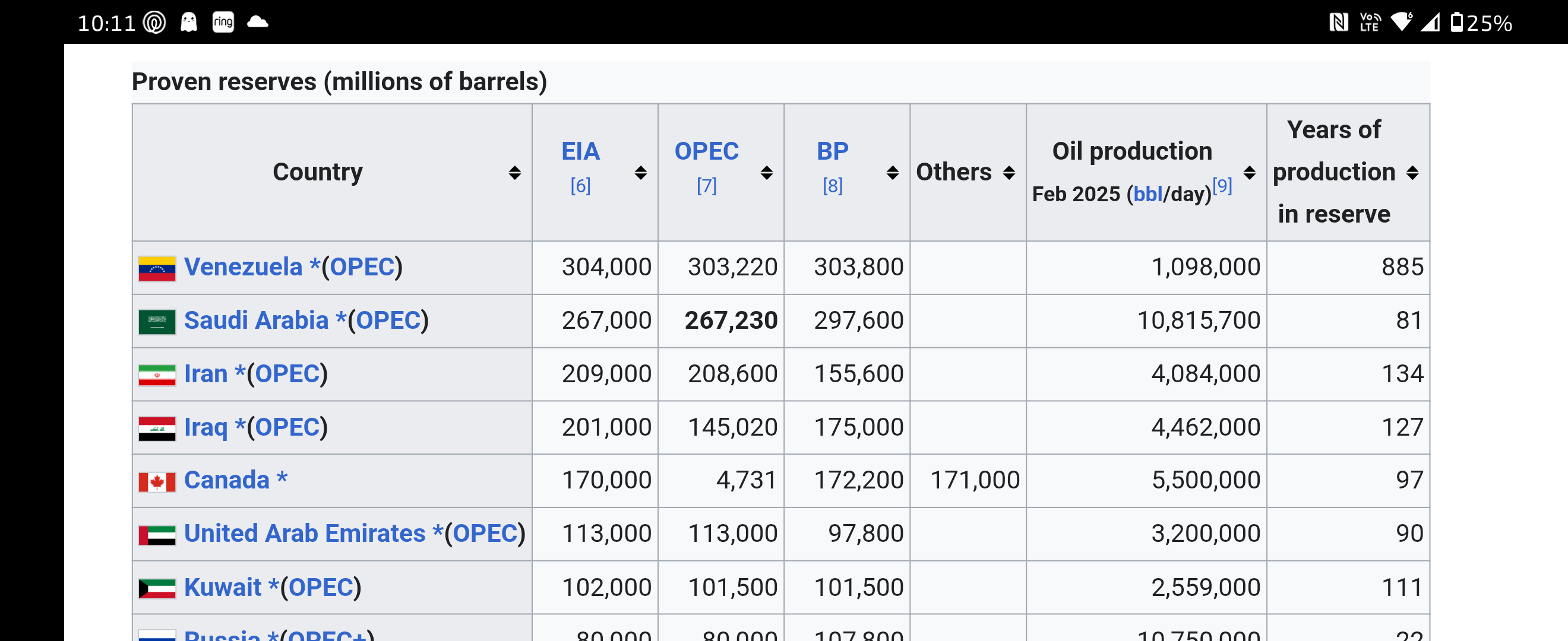
  • Venezuela has large heavy oil reserves, so its barrels are valuable to U.S. refiners trying to optimize diesel and jet fuel output and margins, especially as other heavy suppliers (like some Russian and Mexican grades) are constrained.[5][1][4]

Migration pressure

  • Venezuela’s collapse has pushed roughly 7.7–7.9 million people to leave the country, making it one of the world’s largest displacement crises.[2][3][6]
  • U.S. policymakers see any economic and political stabilization in Venezuela as part of a “root cause” approach to reducing migration pressure on the southern border, even as sanctions themselves can worsen the crisis.[3][2]

Crime and state–cartel links

  • U.S. indictments and reporting describe elements of the Venezuelan state and military as involved in cocaine trafficking (“Cartel of the Suns”).[3]
  • Venezuelan-origin gangs like Tren de Aragua have spread across South America, tied to extortion and human trafficking, which raises regional and, increasingly, U.S. security concerns.[3]

Great powers and the neighborhood

  • Russia has used Venezuela as a platform for military cooperation and bomber deployments, Iran for sanctions-busting and strategic presence, and China as a major creditor and investor in oil and infrastructure.[3]
  • U.S. strategists worry about these actors gaining leverage in what Washington still treats as its near abroad.[3]

Guyana and Essequibo

  • Venezuela’s claim to Guyana’s oil-rich Essequibo region, including a 2023 referendum, raised the risk of conflict in a zone where ExxonMobil and others operate.[7][8]
  • The U.S. responded with visible military cooperation with Guyana, signaling that aggression there would hit both U.S. commercial interests and regional stability.[9][7]

In short, Venezuela matters to Washington because of refinery economics, migration and crime, great-power competition, and a live border flashpoint with Guyana—not because the U.S. lacks oil.[8][1][2][9][3]
1 2 3 4 5 6 7 8 9

top 26 comments
sorted by: hot top controversial new old
[–] AmbiguousProps@lemmy.today 25 points 6 days ago (1 children)

Is this LLM slop? It has the bullet points, quotes from what appear to be a prompt, the classic slop phrases such as "real and structural" and "in short", and the emdash. I can explain away one of those but when you put it all together, it stinks of pure slop.

[–] stoy@lemmy.zip 17 points 6 days ago

Doing research requires more than asking your favourite chatbot.

[–] theneverfox@pawb.social 8 points 5 days ago

This is just nonsense. I don't know where to start.

There's no strategic reason for the US to decapitate Venezuela. It's fucking Venezuela. They're a largely underdeveloped county who owes us huge amounts of oil rights... Which they live up to, Exxon Mobile just owns one of their biggest oil fields. They used to send us half a million barrels a day on top of that, until Trump term 1 sanctions cut that down

The only problem we have with Venezuela is they don't let us economically colonize their county. It's a potential fresh market closed to investment, billionaires hate that

[–] ieatpwns@lemmy.world 7 points 5 days ago

“Anyone have any thoughts?”

Clearly you dont

[–] dumbass@piefed.social 7 points 6 days ago* (last edited 5 days ago) (2 children)
[–] jaykrown@lemmy.world -5 points 5 days ago

Venezuela’s claim to Guyana’s oil-rich Essequibo region, including a 2023 referendum, raised the risk of conflict in a zone where ExxonMobil and others operate

[–] jaykrown@lemmy.world -3 points 5 days ago (1 children)

Venezuela matters to Washington because of refinery economics

[–] dumbass@piefed.social 3 points 5 days ago (1 children)

The only thing they care about. They don't give a shit about the rest.

[–] jaykrown@lemmy.world -4 points 5 days ago

China as a major creditor and investor in oil and infrastructure.

[–] PiraHxCx@lemmy.dbzer0.com 3 points 6 days ago

Hmm, does anyone really believe US cares about migration and crime in South America?

[–] prole@lemmy.blahaj.zone 1 points 5 days ago

OH NO, BIG SCARY TREN DE ARAGUA, THE GANG LITERALLY NOBODY EVER HEARD OF BEFORE 2024.

[–] frisbird@lemmy.ml 0 points 6 days ago

Migration out of Venezuela is caused by 20+ years of US economic sanctions that have crippled their economy and made it very difficult to live there. Under the initial sanctions Venezuela ended up in severe food insecurity. Maduro had a huge part in increasing domestic food production to address this but it took many years to recover.

When the economy is crippled by sanctions, poverty takes broad hold of the population. Poverty spawns crime. Poverty + crime spawn migration.

Drugs in South America, almost universally, are infiltrated by CIA black ops. That's not to say every cartel is infiltrated, but it is to say that nearly every supply chain has the CIA in it somewhere and nearly every inter-cartel conflict has the CIA involved at some level.

The problem with opiates is not a problem of supply, it's a problem of demand. US CIA drug production is plenty enough for the US to consume. The problem is that the billionaires decided they could make a lot of money getting. Americans hooked on opiates. We know this fact, the research was done, the smoking guns were found, the pharma executives knew exactly what they were doing, the indicitments were issued. A couple people went to jail for a few years. The government took some of their money. Everyone else got away with literal mass murder and made hundreds of millions for it.

Venezuela is not a drug manufacturer. They probably have significant drug trafficking that goes through the country and they probably take a cut of the money to help alleviate the damage 20+ years of sanctions have been doing to their country. Plus everyone needs a source of untraceable cash if they're going to build a covert force to fight against US covert operations, which have also been on the ground in Venezuela for 20+ years.

No, the price of gasoline is not the reason. However, Venezuela's oil extraction operations in 2025 reached a million barrels per day, which generates about $2B USD each money in oil revenues.

Oil is one reason.

Socialism is another reason - Venezuela is part of the Bolivarian movement and has been openly anti-imperialist for 25 years and it's been working, even against brutal sanctions.

Domino theory is another reason - linked with the socialism aspect, if one anti-imperialist is successful, the fear is that it will spread. But also, if one anti-imperialist falls, then the hope is that others will fall. We see this form of domino theory happening even today with administration's threats against Cuba, Colombia, and Mexico.