64
56 million years ago, the Earth suddenly heated up – and many plants stopped working properly
(theconversation.com)
Discussion of climate, how it is changing, activism around that, the politics, and the energy systems change we need in order to stabilize things.
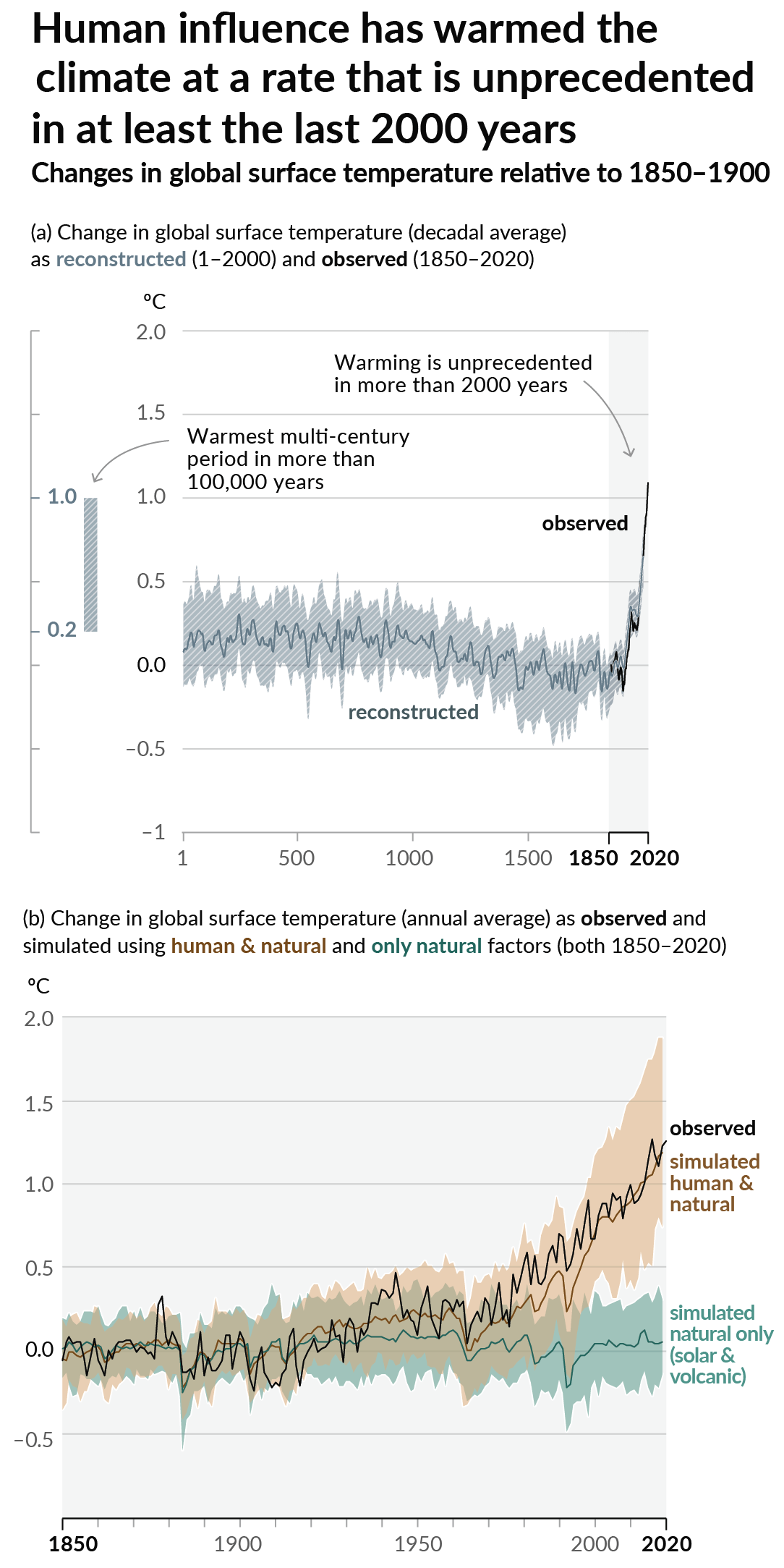
As a starting point, the burning of fossil fuels, and to a lesser extent deforestation and release of methane are responsible for the warming in recent decades:
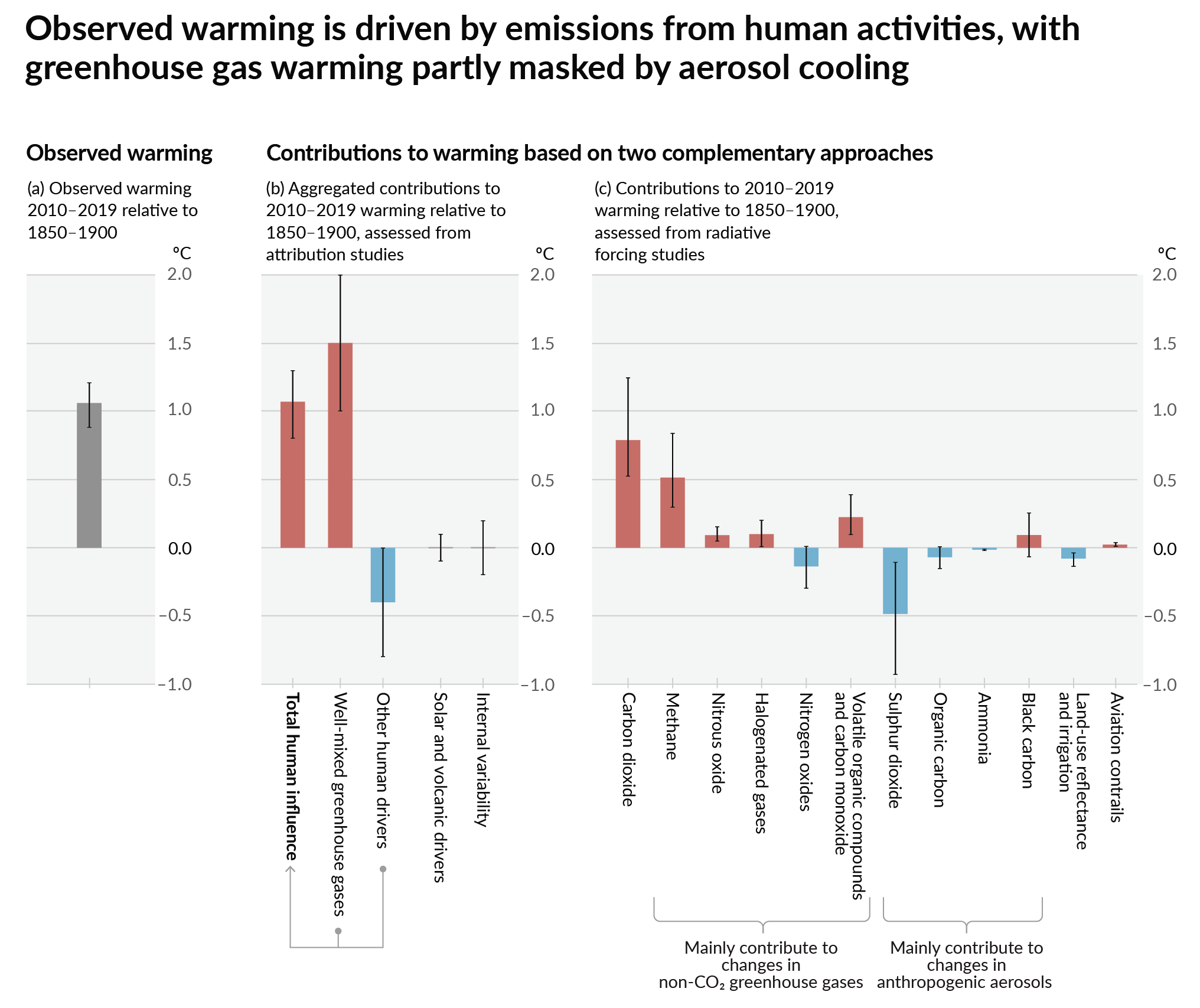
How much each change to the atmosphere has warmed the world:
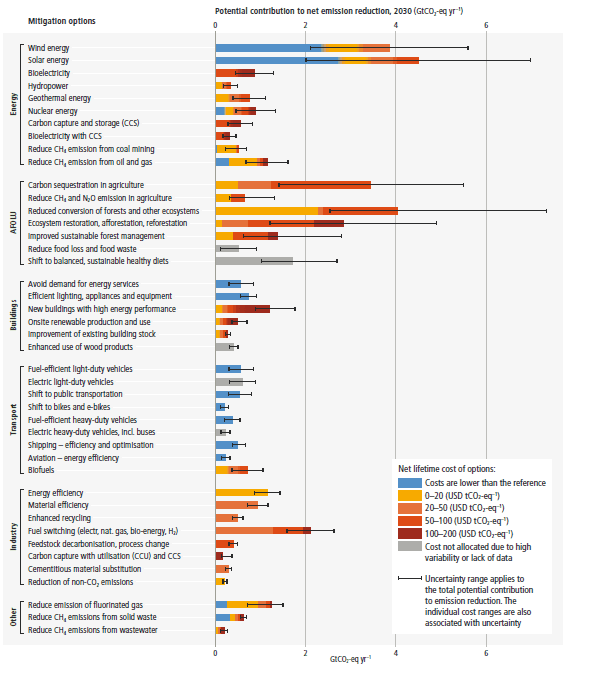
Recommended actions to cut greenhouse gas emissions in the near future:
Anti-science, inactivism, and unsupported conspiracy theories are not ok here.
They don’t mention the cause of the Paleocene-Eocene Thermal Maximum—was the biosphere still experiencing evolutionary adjustments from the Chicxulub impact 9 million years earlier? Or was there a geological cause?
A huge amount of extra CO~2~ showed up. We don't have a definitive answer as to where from.
Carbon emitting intelligent species ;)
Sometimes I wonder if humans or another species millions of years ago had technology as good or better than what we have now that was just biodegradable which is why we haven't found evidence of it.
You should read up on the Silurian Hypothesis. It’s a fun scientific paper asking whether, if another intelligent species had arisen on Earth in deep time, we would be able to detect it. One of the most promising theoretical signals might be unexplained carbon spikes…. Very little other evidence could be expected to endure. No reason to believe it’s true, hard to prove a negative, etc etc, but it’s fun to think about.
That's a fun idea.
The cause is uncertain for now.
It's known with certainty that polar ice did not exist then - so it was not Antarctic melting giving a feedback bump. Besides the feedback bump caused by Antarctic melting is speculated to be on the order of 2 degrees.
It could have been partly volcanic, but not mainly volcanic. It certainly wasn't tectonic, as the event was a brief spike of "only" ~200 000 years.
The study below, somewhat speculative in nature, proposes that bottom water warming occurred 3000 years before the carbon trip, and decomposition of methane hydrates could have been the amplifier of the process. Which, to me, suggests that maybe the cause was geological.
https://pubmed.ncbi.nlm.nih.gov/18097406/
A hypothesis referenced in Wikipedia: a lot of high-carbon rock (kimberlite) experienced a volcanic eruption that released much CO2, and brought oceans above the theshold where methane hydrates decomposed and supplied methane.
Although the cause of the initial warming has been attributed to a massive injection of carbon (CO2 and/or CH4) into the atmosphere, the source of the carbon has yet to be found. The emplacement of a large cluster of kimberlite pipes at ~56 Ma in the Lac de Gras region of northern Canada may have provided the carbon that triggered early warming in the form of exsolved magmatic CO2. Calculations indicate that the estimated 900–1,100 Pg[194] of carbon required for the initial approximately 3 °C of ocean water warming associated with the Paleocene-Eocene thermal maximum could have been released during the emplacement of a large kimberlite cluster.[195] The transfer of warm surface ocean water to intermediate depths led to thermal dissociation of seafloor methane hydrates, providing the isotopically depleted carbon that produced the carbon isotopic excursion. The coeval ages of two other kimberlite clusters in the Lac de Gras field and two other early Cenozoic hyperthermals indicate that CO2 degassing during kimberlite emplacement is a plausible source of the CO2 responsible for these sudden global warming events.