Anonymouse

joined 3 years ago
[–] Anonymouse@lemmy.world 8 points 1 month ago (3 children)

Love this idea. If it's visible or audible in public,it's legal to record. It's a fine line against stalking, so maybe do it with a few hundred of your friends.

Even privatebjets emit a transponder signal. I wonder how hard it would be to sniff this out of the air. Maybe some of our HAM friends would know.

Of course, obligatory IANAL.

[–] Anonymouse@lemmy.world 2 points 1 month ago

It's about as much privacy as shutting the blinds. Maybe less. It's not much, but it's not nothing. I was hoping others would share links to the other street view services' blur request form.

[–] Anonymouse@lemmy.world 2 points 1 month ago

I can't figure this out. They say that you can redact your name and financial stuff. The only thing they'd know is your house, (throw away) email and gas provider. What am I missing?

[–] Anonymouse@lemmy.world 4 points 1 month ago

I probably should have posted this to a degoogle forum instead. For me, it's a bit of an F.U. to Google for capitulating to a corrupt US government by changing the names of various bodies of water. In my head, if everyone does this, maybe it'll be enough to move people to some other mapping software.


You should know that you can request your home be blurred from Google Street View.

[If] you prefer your home, vehicle or full body not be shown, you can request it to be blurred. Only the home owner or tenant is eligible to request a house blur.

the blur is permanent. We also ensure that the newly blurred Street View image is excluded from generative AI prompting from that point onward, honouring your privacy choice.

[–] Anonymouse@lemmy.world 4 points 1 month ago (1 children)

I've read that the last time any consumer privacy laws were enacted at the federal level, it was in the 1980s when a video store clerk sold a politician's embarrassing video rental history to a newspaper.

I'm wondering if any politician who drives a car past one of these things has gone anywhere that they'd not like the public to know about.


Reversing course, Flock Safety—the surveillance technology vendor most known for its extensive network of automated license plate readers—has announced that it will end a pilot for its acoustic gunshot detection devices to identify signs of “human distress.”

[–] Anonymouse@lemmy.world 4 points 2 months ago (1 children)

I wondered about this for cars and ALPR cameras. Could you cover your car in license plates and overwhelm the cameras?

[–] Anonymouse@lemmy.world 4 points 3 months ago (1 children)

IANAL and you should do your own research, but my understanding of the dangers of something like a Flock camera is that it's a private company who surveils citizens and compiles the data into something that law enforcement can purchase without a warrant, effectively circumventing Americans' 4th amendment rights. In this case, it's a city device that can host a camera. I believe that the city would not be able to perform warrantless mass surveilence using these devices the same way that a private company can. I believe it's similar to those cameras on traffic signals that monitor the performance of the intersection but not perform ALPR data collection. It's a subtle but important difference.

I may have no idea what I'm talking about also, so if you are an authority on these matters or someone with industry knowledge, please correct me.

[–] Anonymouse@lemmy.world 2 points 3 months ago

They're expanding their footprint around me. The city and adjacent city both have contracts and several retailers have them at all entrances. I tried to see if I could add the locations to deflock via street complete but then realized that I can't log the sites when (safely) driving.

[–] Anonymouse@lemmy.world 18 points 3 months ago (5 children)

Thanks for posting a reference.

The bill aims to ... disable "addicting" design features to minors.

Why only to minors? Don't all people deserve protections from knowingly addictive things?

[–] Anonymouse@lemmy.world 1 points 3 months ago (2 children)

I can't lead an effort to push the local govn't to do something like this. I just don't have the charisma, but I would definitely join the cause. I was a part of a club once to overturn a law in a nearby city. It was interesting to see how it all worked.

[–] Anonymouse@lemmy.world 3 points 3 months ago (1 children)

I've been thinking about these, but worried that they're not legal.

[–] Anonymouse@lemmy.world 5 points 3 months ago (4 children)

I daydream that this guy will threaten to sue the police and they'll come to an agreement to take down all all the cameras. The citizens will be so happy that they'll go to the state legislature and pass a law to forbid warrantless surveilence. The state will rejoice and their congressional representatives will pass a law country wide. The trend will continue globally.


A simple error got magnified by Flock's nationwide surveillance camera network and ended with four cop cars boxing me in.


Google Threat Intelligence Group (GTIG) has observed increasing efforts from several Russia state-aligned threat actors to compromise Signal Messenger accounts used by individuals of interest to Russia's intelligence services. While this emerging operational interest has likely been sparked by wartime demands to gain access to sensitive government and military communications in the context of Russia's re-invasion of Ukraine, we anticipate the tactics and methods used to target Signal will grow in prevalence in the near-term and proliferate to additional threat actors and regions outside the Ukrainian theater of war.

TL;DR: keep your apps updated & don't scan QR codes that you don't trust.


As if anybody here needs a reason to be wary of what you do online, this essay shares how a foreign adversary used back doors that were intentionally put in place to spy on Americans and how the rest of the world probably has the same back doors.

I especially appreciate the phrase "nerd harder" and the quote, "The laws of mathematics are very commendable, but the only law that applies in Australia is the law of Australia".

How can IT folk help politicans to understand?


While reading many of the blogs and posts here about self hosting, I notice that self hosters spend a lot of time searching for and migrating between VPS or backup hosting. Being a cheapskate, I have a raspberry pi with a large disk attached and leave it at a relative's house. I'll rsync my backup drive to it nightly. The problem is when something happens, I have to walk them through a reboot or do troubleshooting over the phone or worse, wait until a holiday when we all meet.

What would a solution look like for a bunch of random tech nerds who happen to live near each other to cross host each other's offsite backups? How would you secure it, support it or make it resilient to bad actors? Do you think it could work? What are the drawbacks?


I thought this group may enjoy this read about a suggestion on an option to take in the Google antitrust lawsuit. Of particular interest is that certain groups feel that the "right" approach is that everyone should be able to surveil the population, Google-style and the choice quote:

The judge repeats some of the most cherished and absurd canards of the marketing industry, like the idea that people actually like advertisements, provided that they're relevant, so spying on people is actually doing them a favor by making it easier to target the right ads to them.


As if you need any more reason to degoogle, consider what would happen if Google removed you from their platform tomorrow. This article some of the problems with putting all your eggs in one basket.


I had a super fast but small SSD and didn't know what to do with it, so I was playing with caching slow spinning LVM drives. It worked pretty good, but I got interrupted and came back a few weeks later to upgrade the OS. I forgot about the caching LVM, updated the packages in preparation for the OS upgrade, then rebooted. The LVM cache modules weren't in the initfs image and it didn't boot.

I should know better. I used to roll my own kernels since Slackware 1.0. I've had build initfs images for performance tweaks. Ugh!

Where's my rescue disk?


Here's the "Privacy First" pitch: whatever is going on with all of the problems of the internet, all of these problems are made worse by commercial surveillance.

If something like this were implemented in US federal law, what could the downsides be? Like California Proposition 65, the "cookie law" didn't stop tracking, it just made more pop ups. Would this do the same thing?


I haven't seen this posted yet here, but anybody self-hosting OwnCloud in a containerized environment may be exposing sensitive environment variables to the public internet. There may be other implications as well.


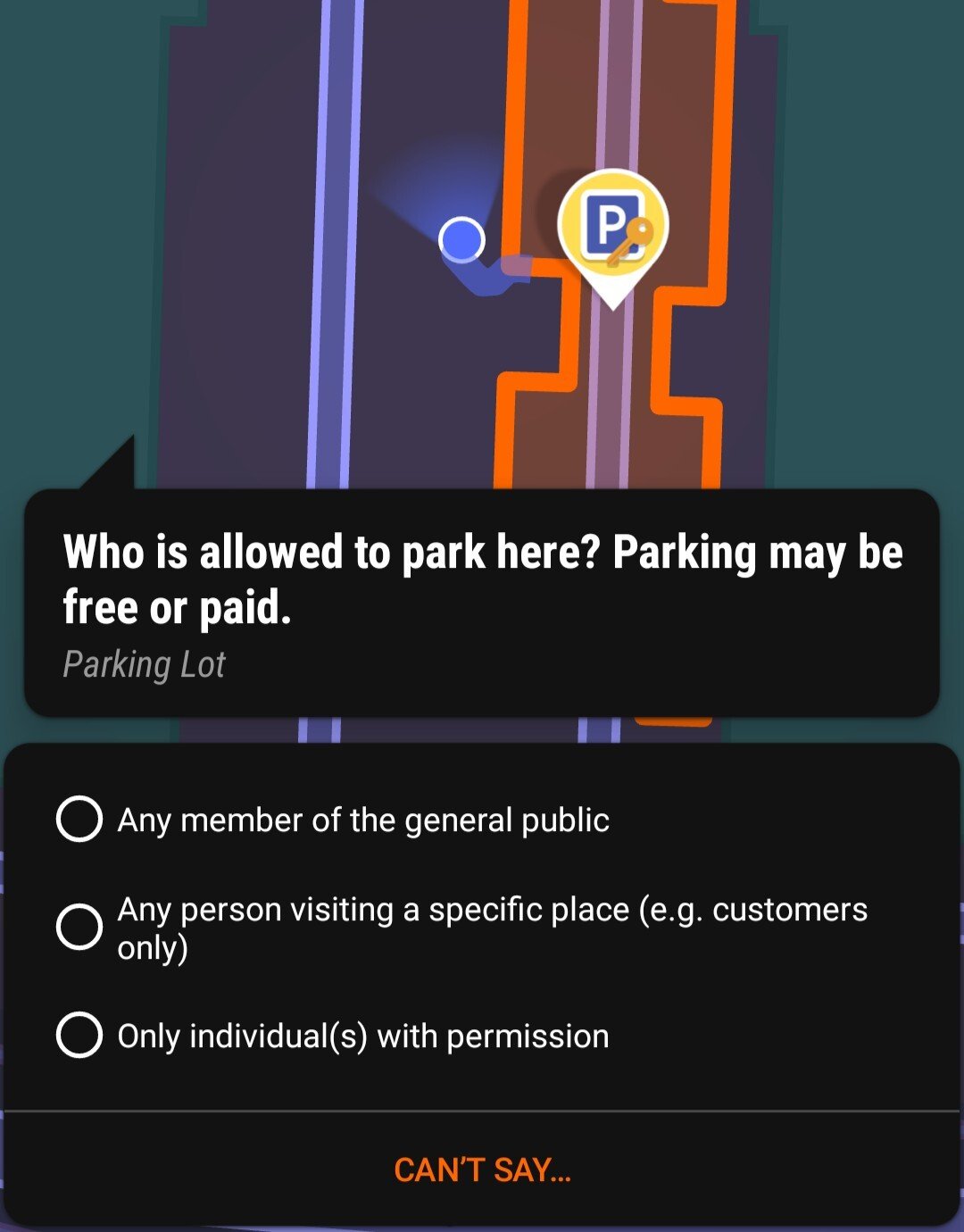
I was out walking around and "popping" quests on StreetComplete. I was wondering what the consensus is on the question "Who is allowed to park here?" In this case, it's an ungated parking lot next to a commercial/industrial warehouse with many companies occupying the same space. A few of the parking spots had a sign indicating "reserved for XYZ customers", but most did not. This is not a city-owned parking lot. What's the right answer?
view more: next ›