The posts about escape velocity (or speed if you prefer) are correct. To that I want to add the following: Gravitational effects technically never end with distance, only become weaker. It's also important to note that every object has a gravitational field, it's just that it needs to be ridiculously big for the force to have any real effect. Gravitational force can be described by the following equation:

where r is the distance between the two objects, and the rest does not matter for us today.
This is the same as the inverse square law of light (this is a pretty good visual):
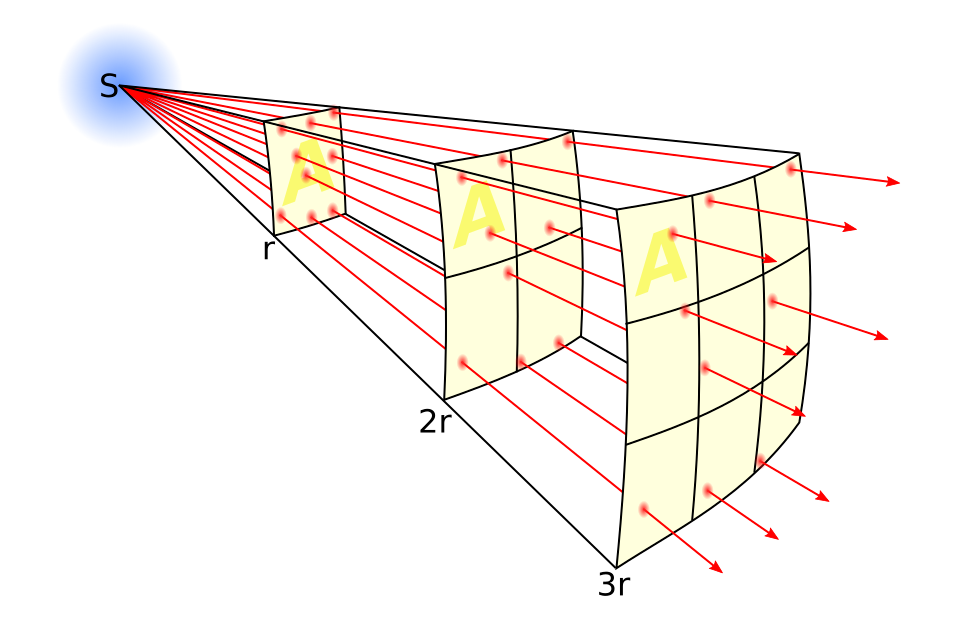
This means if you double the distance between yourself and a star, the strength of its light reaching you will quarter. This is also very similar to the math used to describe electric and magnetic field interactions, but I won't go into that today.
This is why scientists are able to measure gravitational waves from collapsing stars and quasars and stuff at the LIGO Gravitational Wave Observatory, just like how we can observe the light coming from distant stars. However, there is a point where the force of gravity becomes so weak as to be inconsequential, just like how at the edge of the solar system, the sun merely looks like a bright star. That is described as the gravitational sphere of influence, the rough approximation of the distance from a celestial body where it exerts the most gravitational force on a given object.
Escape speed is the speed at which an object must travel, given a distance from said body, to escape its sphere of influence. The Earth+moon have a sphere of influence of about 9.29E5 km.
Thanks, that does help some. Eq 22 is what I was reading, and yeah, it's a weird and confusing derivation. In reading Eq 22 closer, it's helpful, but not as helpful as I would have liked. What's funny in reading it is that it's also in correlation to q, which I would have expected to be calculated in terms of v. sigh maybe it would be better if I went through and derived the equations myself, would probably be more useful that way anyway.