LallyLuckFarm

joined 2 years ago
MODERATOR OF
[–] LallyLuckFarm@beehaw.org 3 points 1 hour ago

(Image description: my not-quite-two-year-old and I dig up a hosta crown to clear the entrance to the camper we'll be using to escape construction noise)


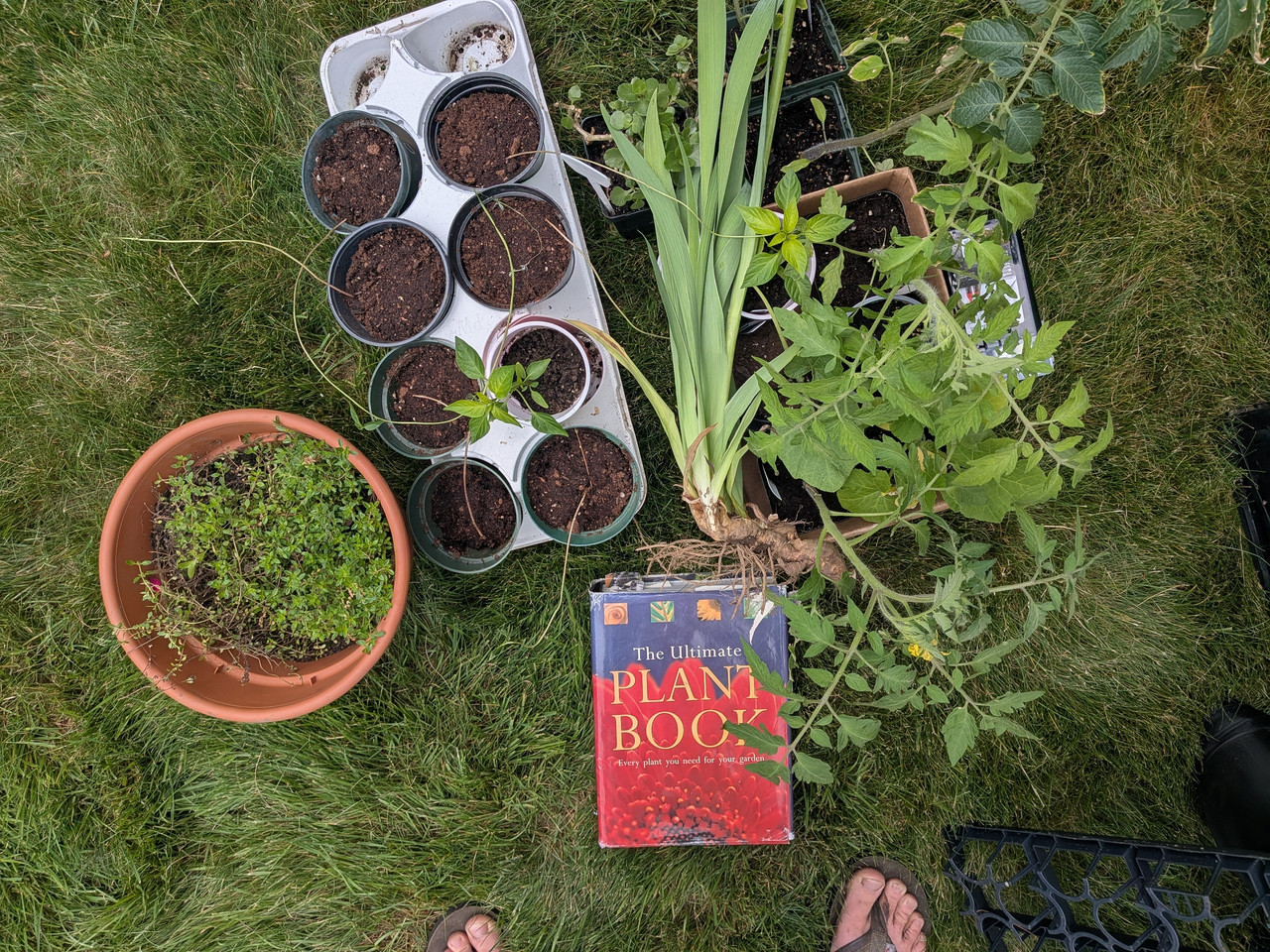
I've spent the last month removing and replanting pretty much all of our foundation plants (things around the house) in advance of some pretty serious work on our home, which has left little time for planting all my annuals. I'm hoping I've got the ability to get more veggies in the ground once the work starts next week

[–] LallyLuckFarm@beehaw.org 4 points 1 week ago (1 children)

Any advice for balancing your own professional aspirations while prioritizing your partner's career goals and your child's physical/mental/emotional wellbeing is certainly appreciated

[–] LallyLuckFarm@beehaw.org 4 points 1 week ago

❤️ thank you! It's a lot of balancing but the end result is going to be worth all the effort, I'm sure.

[–] LallyLuckFarm@beehaw.org 7 points 1 week ago (6 children)

We've been in the planning and prepping phase getting ready for serious renovations on our house, and it's been difficult spreading my attention between house stuff, nursery stuff, and parenting an I Do/ runner of a toddler. Now the only things in our living room are a speaker, my wife's workstation, and a chair, our daughter is helpful in the garden (if the gate is closed), and I'm basically prepped for market season which starts Saturday. I kinda feel like that last dollop of jam in the jar that's probably not enough but the peanut butter has already been spread and this sandwich is happening no matter what. The anxiety has been keeping me from engaging with the online communities that I love, and that lack of interaction has honestly only compounded things.

So, I've missed you all and hope you don't mind that I had to hunker down so much to survive the hardest adulting in my life.

[–] LallyLuckFarm@beehaw.org 2 points 2 weeks ago

Yes, I definitely think it's worth saving each section (I have a problem, and the problem is not enough plants). Those couple of shorter sections should be just fine for the few days it will take for them to begin rooting.

As for blue and purple together: I don't recommend removing the topmost leaf or bud (also called an apical bud) because they help to regulate the growth hormones of the plant and will have a stronger growth response than leaves or buds further down. Cutting a leaf as pictured below will preserve that hormone regulator but give the plant less to maintain while new roots are forming.

[–] LallyLuckFarm@beehaw.org 5 points 2 weeks ago
  1. Props to her, and also to you for proper attribution
  2. Thank you for relaying that information
  3. I dunno, not plant them? But that would've been way less cool
[–] LallyLuckFarm@beehaw.org 2 points 2 weeks ago (2 children)

The spots you picked to cut look good! I'd cut to favor blue, and let go of purple in favor of orange but great job. You can keep blue and purple on the same stem together, but if that pair look sad after a few days I'd recommend cutting across the leaves to remove 40-50% of each leaf. Doing that reduces the amount of water lost to respiration and the amount of leaf to maintain on reduced roots.

The ones you've rooted already look great. Another 2-3 days in water and they would be at a point where I would feel confident transferring them to potting soil. Keep in mind that those roots are delicate, so take care when you're firming them into the pot.

Water changes every 2-3 days is a good practice, more often if you notice any cloudiness in the water. The cuttings will release a little bit of rooting hormone into the water as they grow, spurring on the others, but not usually enough to change the appearance of the water.

[–] LallyLuckFarm@beehaw.org 6 points 2 weeks ago (2 children)

Beans, yo! You get +5 cool points for growing landrace plants, and another 5 for mob sowing in a pot!

[–] LallyLuckFarm@beehaw.org 3 points 2 weeks ago (4 children)

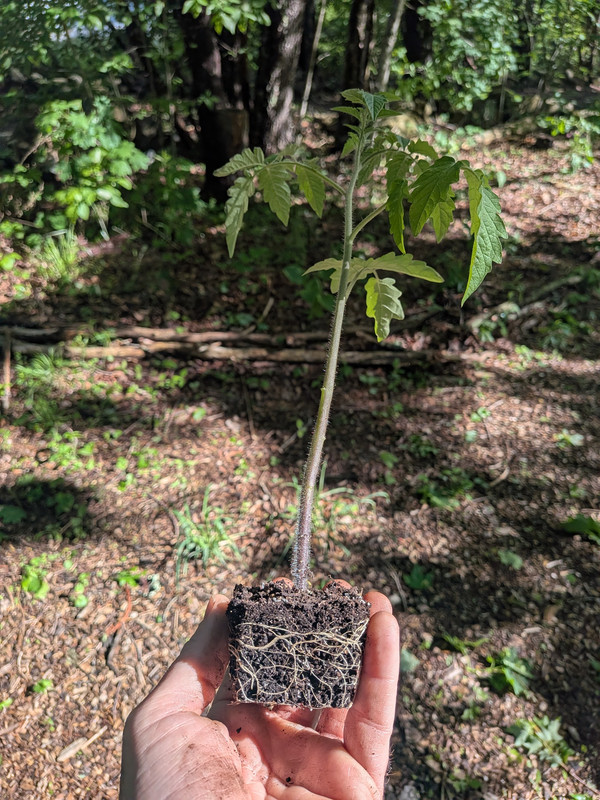
Oh. Oh. That's just not enough roots for that much stem. Let's not be pessimistic though, because you have a lot of material to work with! It will take a few more days, but that's okay too.First, I'm going to give you a picture of what I consider a good start for a rooted division, so you know the kind of look you're aiming for at first.

You're going to want to make a few additional cuts to the stem, and a handful of leaves. The little brown nubs are root nodes - they are important, and you want at least two on every section you're about to make. Think of the sections of stem as energy reserves, and do your best to make them long enough to stick out of the jar. It's time to make more plants!

Get a sharp, sterile pair of garden shears. Starting from the rooted bit you have, find the first decent looking leaf. Cut the main stem right above where the leaf connects to it. Don't damage the part where the leaf connects to the stem, because that's where the rest of your new plant will come from at first. Now go further up the stem until you find another mostly green leaf, and cut just above that one too. Go up the stem til you get to the last good leaf. If you want more cuttings than that, select the best from what's left. Remember about stem length.

Now remove every leaf that isn't your topmost/ best of each cutting. Place all your new cuttings into the water jar and let them rest. You'll start seeing some roots start to form after a few days, but if you pull your original rooted section when you see the others that's what you'll be looking for on the ones that stayed in your jar.

There are some succulent-specific substrate mixes you can find at garden stores, or you can see if your locally owned greenhouse will let you fill a bin with some of their high porosity substrate for a few bucks. Either would be good to mix with the bag you already invested in in order to balance out the moisture when you plant all your cuttings. If you don't actually want that many, this is a good time of year (assuming you're in the northern hemisphere) to donate the ones you don't want to a plant sale for a good cause; libraries, food charities, land trusts, and your master gardener volunteer chapters are some of the kinds of orgs you could consider.

[–] LallyLuckFarm@beehaw.org 6 points 2 weeks ago (6 children)

Do you have an idea of how much root mass there is? Too few roots and too much plant can lead to very harsh transplant shock, and the plant will abandon leaves and stem to rebalance itself. Best practice is to remove top growth when dividing to prevent the plant from going through enough shock to kill it (I run a small plant nursery and do lots of divisions).

I'd recommend removing it from the pot and substrate to place in water for a day or two - leave it somewhere without direct sunlight to help promote root growth over shoot growth. This will also give you an opportunity to gauge how much root mass there is compared to the rest of the plant. If they seem about even, don't worry about cutting the stem back. If there's more shoot than root, cut the stem back just above one of the leaf nodes.

Not to go overboard (too late?) but "moisture control" can apply to potting mixes that are high porosity (fast draining, low moisture holding) or those that have chemical wetting agents that hold water long after you've last applied any. If the moisture control stuff you got is from miracle gro I'd recommend taking some aside, placing it in a pot, and testing how long a given amount of water keeps it wet while you're rehabilitating your plant. This will give you better information to set your watering routine once your plant is happier. If it holds too much water you can increase the porosity and draining potential by mixing in some all purpose sand (not playground sand, it's too fine)

[–] LallyLuckFarm@beehaw.org 4 points 1 month ago (1 children)

Best to ID the vines first. I use inaturalist for quick suggestions of what a plant might be if I don't recognize it, then compare close up pictures to what I'm seeing. This will let you know if you need any ppe for the task and can inform what you need to do afterwards to keep them from covering the tree again.

To your question - yes, cut the vines at their base. Some vines secure themselves very tightly to the tree, others have a looser hold. If these vines are wound very tightly to the tree it would be worth cutting them, then letting the upper growth die back before pulling it from the tree. Doing it this way can prevent damage to the bark and cambium of the trees you're freeing.

[–] LallyLuckFarm@beehaw.org 6 points 2 months ago

Beat me to it! I just had a meeting this morning with our library director about who's going to be helping with our annual seed swap and seed library refresh (happening this Saturday and I'm stoked)


[Image Description: Seedling Bing cherries ready to be potted up for the growing season fit in the palm of my hand.]

We have sixteen cherry pots and five red plum pots so far. Twenty three other species of trees and shrubs to go, not counting herbaceous perennials and annuals.

There's still three feet of snow outside.

Anyone else getting a crazy head start this year?


[Image description: a two panel meme. The first panel says "if you don't love me at my" over an image of leaves yellowing. The second panel says "you don't deserve me at my" over an image of bright yellow flowers, one of which is being visited by a bumblebee]


[Image description: a father and daughter have their backs to the camera while cutting elderberry stems for propagation. They are both on grass despite a seat being in the picture]

Juniper is still a little young to work the snips but she was instrumental in helping me pick which stem should be processed next


[Image description: a picture of a stroller on the edge of a street with a child in the seat. In the tray of the stroller is a pair of secateurs, while several young beaked hazelnut bushes spill out from the bin on the bottom of the stroller]

Yesterday I took my daughter out to harvest some beaked hazelnut (Corylus cornuta var. cornuta) bushes from a naturally occurring stand on the side of our street. We took ten rooted cuttings from a patch of several dozen established bushes, all from within the range of the town's flail mower. They've since been planted into a hedge on one of the boundaries of our property, never to be mowed down again.


[Image description: five muscovy adolescents hang out together under some shade]


Thanks for beeing you, Beehaw


[Image description: two ducklings nibble my toes while their siblings look on to see if I'm scary or not]

The toe nibbling is a nightly affair with their mother, Shadé, but tonight marked the first time the kids have joined in. I find that this life stage is the easiest to get them comfortable with hands, and even managed to give some chest scritches and back pets while some were nibbling on my fingers.


[Image description: a toad, sitting upright, in a small nursery pot, is shaded from the midday sun by the leaves of a young echinacea]

I kept finding a dug-out section in this one particular pot, with all of the potting mulch pushed to one side. At least they're vigilant


[image description: in the background, two groups of ducklings lay normally while sunning themselves on a black driveway. In the foreground is one duckling laying on its back with legs outstretched, while gently lifting its head to watch me take its picture]

I swear, there's always one odd duck in a clutch. The laying on the back is a new twist though.


[Image description: a picture of a bumblebee drinking nectar from a purple bee balm flower. The venation of the wings is clearly visible.


[Image description: a dozen muscovy ducklings form an interlocking mass of bodies and bills during a nap pile on a bit of driveway. In the foreground, their mother keeps a watchful eye on the sky]

A few of them took an opportunity to investigate me but were still a little hand-shy. In another week or two they will be trying to bully me.

view more: next ›