politics
Welcome to the discussion of US Politics!
Rules:
- Post only links to articles, Title must fairly describe link contents. If your title differs from the site’s, it should only be to add context or be more descriptive. Do not post entire articles in the body or in the comments.
Links must be to the original source, not an aggregator like Google Amp, MSN, or Yahoo.
Example:
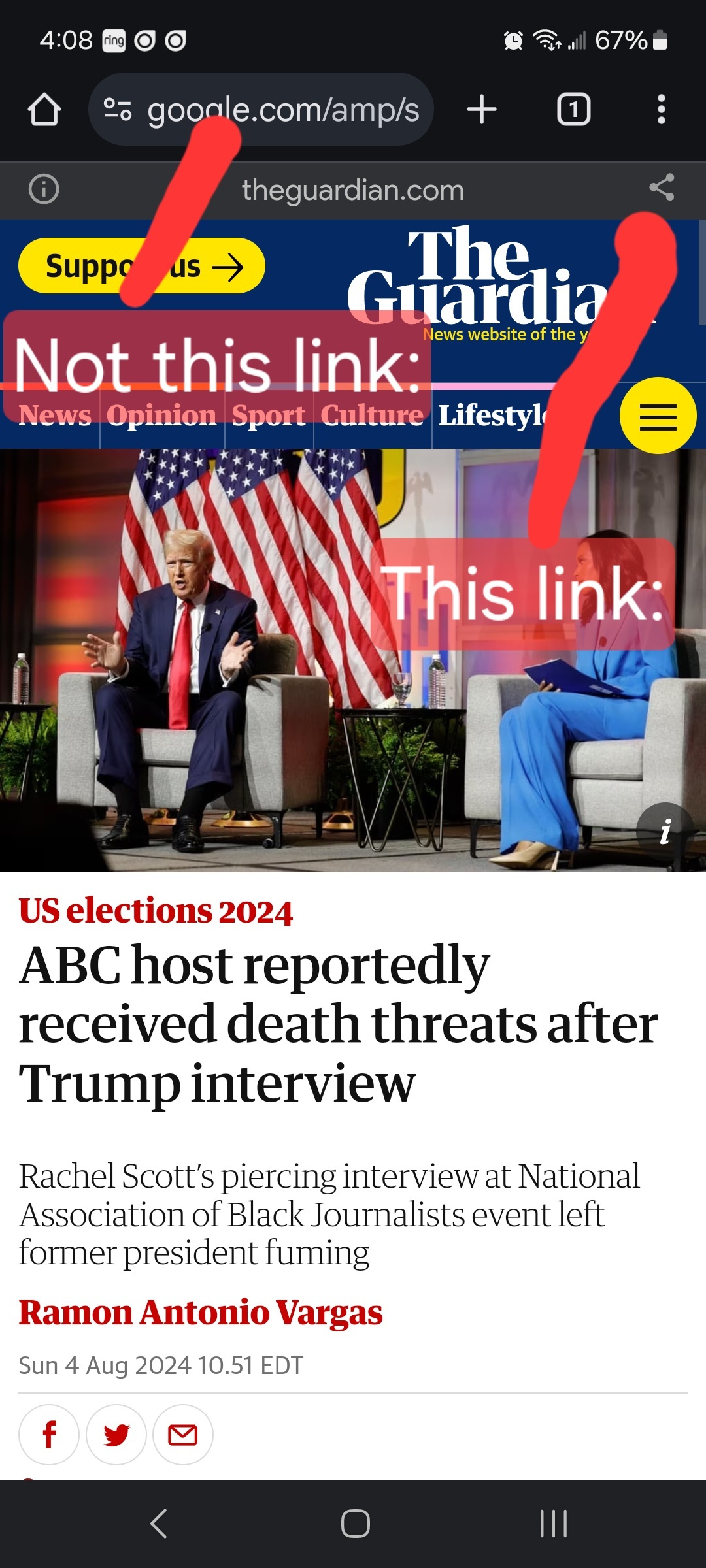
- Articles must be relevant to politics. Links must be to quality and original content. Articles should be worth reading. Clickbait, stub articles, and rehosted or stolen content are not allowed. Check your source for Reliability and Bias here.
- Be civil, No violations of TOS. It’s OK to say the subject of an article is behaving like a (pejorative, pejorative). It’s NOT OK to say another USER is (pejorative). Strong language is fine, just not directed at other members. Engage in good-faith and with respect! This includes accusing another user of being a bot or paid actor. Trolling is uncivil and is grounds for removal and/or a community ban.
- No memes, trolling, or low-effort comments. Reposts, misinformation, off-topic, trolling, or offensive. Similarly, if you see posts along these lines, do not engage. Report them, block them, and live a happier life than they do. We see too many slapfights that boil down to "Mom! He's bugging me!" and "I'm not touching you!" Going forward, slapfights will result in removed comments and temp bans to cool off.
- Vote based on comment quality, not agreement. This community aims to foster discussion; please reward people for putting effort into articulating their viewpoint, even if you disagree with it.
- No hate speech, slurs, celebrating death, advocating violence, or abusive language. This will result in a ban. Usernames containing racist, or inappropriate slurs will be banned without warning
We ask that the users report any comment or post that violate the rules, to use critical thinking when reading, posting or commenting. Users that post off-topic spam, advocate violence, have multiple comments or posts removed, weaponize reports or violate the code of conduct will be banned.
All posts and comments will be reviewed on a case-by-case basis. This means that some content that violates the rules may be allowed, while other content that does not violate the rules may be removed. The moderators retain the right to remove any content and ban users.
That's all the rules!
Civic Links
• Congressional Awards Program
• Library of Congress Legislative Resources
• U.S. House of Representatives
Partnered Communities:
• News
view the rest of the comments
I read the article, but don't follow the argument. Add some seats, and then each representative will represent fewer voters. So what? How does that fix gerrymandering or make elections more representative?
The easiest solution is of course proportional representation. Can't gerrymander if there are no districts.
But if you must have districts for some reason, then... just don't put politicians in charge of drawing them.
More representatives means more districts. More districts means smaller districts. The smaller the district the harder it is to gerrymander. If you take this to the extreme, a district is one person and that person is the representative, there is no gerrymandering and you’d have a true democracy.
To try and understand how/why adding additional seats to Congress would be a positive change (or really, ANY proposal) - take the most extreme ends of the spectrum:
With 1 single seat, 50.1% of voters would get 100% of the representation.
With 1 seat for every voter, 50.1% of voters would get 50.1% of the representation.
Obviously, not EVERY single person can be a congressman - so the goal should be to find the minimum number of representatives required to optimally represent the populace.
Always nice to look at edge cases, but the 1 seat per voter is never going to happen, not least because that'd be direct democracy, not representative democracy.
For any realistically-sized constituency, as long as the election remains first-past-the-post, if the votes are evenly split among districts, 50.1% of the voters would still get 100% of the representation.
In addition, gerrymandering will still be possible.
As for proportional representation (upthread), it can also lead to antidemocratic anomalies, as can every electoral system. That's because they all have to meet requirements that are sometimes logically contradictory. In existing systems that approximate PR, coalition governments are common, and centrist parties have disproportionate power since they're the difference between a coalition with a majority and one without. So the centrists end up perpetually in government and often prevent the larger parties from meeting their manifesto commitments.
Your math is wrong.
Let's say you have 1 district. 50.1% wins, provided you have only 2 parties. If you have more than two, you could win with as little as 34% in FPTP.
Let's say you have 3 districts. You need 2 districts to be in control. Each of those two need 50.1% of one third of the population for 2 parties, or about 34% of the vote. If there are more than two parties and FPTP, you could win majority with as little as 2/9, or 22% of the popular vote.
The more districts you add, the fewer people you need to win a simple majority in FPTP.
Those are ideal numbers, but so is the 50.1% you submitted.
My math is exactly correct. Note the assumptions "for any reasonably-sized constituency" and "if the votes are evenly split among districts." That's the very well-known mathematical practice of freezing or bounding certain variables in order to focus on the effect of others.
Let's say a reasonably-sized constituency has more than a few hundred voters. Then the anomalies you'd see with 1-person districts won't happen. First simplifying assumption.
In that scenario, with votes evenly distributed, 50.1% for Party A in each district leads to Party A controlling 100% of the seats, as I said. And if there are more than two parties, as long as the vote is evenly split among districts and Party A is the leading party, Party A will still get 100% of the seats. You can keep arbitrarily adding parties to show the same effect with even smaller vote shares.
Your observation that even smaller vote shares can still control a legislature is correct, but requires multiple parties with roughly similar vote shares, or votes to be distributed unevenly to the parties among the districts. That's a bit closer to how real elections work, but in practice, most uneven distributions cancel out each other's effects, and only relatively few of such patterns can lead to the extreme cases you describe. And there are seldom many parties that gain over 10% of the vote. Those things can happen, but it's putting you a few sigma out on the tail of the curve. Though in the UK, recent governments have had parliamentary majorites won by parties that got 35-40% of the vote. FPTP with multiple parties can cause that. Changing constituency sizes wouldn't have any effect on that kind of outcome.
Your match is correct to get 100% of the districts, but a party only needs to get between 50 and 75% of the seats to have uncontested control of the legislative body, depending on their particular laws, meaning that above that threshold the rest are poorly represented, if at all. Hence, as little as 25% of the popular vote, even with only 2 parties. Yes, without perfect gerrymandering, you won't reach those numbers, but minimums and maximums don't care about sigmas.
Actually, thinking about this, if you have one person per district, direct democracy, you need 50.1% to win a simple majority. If you have one district with 2 parties and FPTP, you need 50.1%. But overall, you need about half the votes per district and about half the districts for a simple majority, which means for most values of districts and people per district, you need about 25% of the vote. Near the extremes of number of districts and the number of people per district, you can see fluctuations up to just over 50% and a fair amount below 25%.
We'll it would be harder to pick some Democrats from this neighborhood and a bunch of Republicans from that neighborhood if the district size is only one neighborhood
Also it would allow for more specific representation. Using myself as an example, my district is basically my county plus a couple small parts of some neighboring counties. One end of the county is pretty rural, the other half butts up against a major city and pretty much just bleeds right into it. We have some ridiculously wealthy old money areas, and we have some that look like they were plucked from a movie about gang violence. There's a few towns here that I've legitimately never even had to drive through. It's kind of insane that all of these different areas are being represented by the same person, we have very different and sometimes conflicting concerns. And if I needed to go to my representatives office for any reason, I'd have to drive about an hour to get there because of course she's set up shop at the far end of the county from me.
Personally, I think the ideal way to draw districts is to kind of have voters do it when they vote. Give them a map, have them select the areas where they live, work, shop, drive through regularly, or have other connections to until they've selected an area with a big enough population to be a district. Then feed those maps into a computer and have it average them all together to generate the new district map.
They'll just take half of one neighborhood and half of the other. That happens now.
Doesn't really matter when those neighborhoods are likely very similar. That's a far cry from a huge urban center drowned out by rural counties.
It would make it harder to bribe congress.
How exactly?
Really?
Obviously more people makes it harder, it's harder to bribe enough in congress to make a law pass. First it's more expensive, second more people need to be on the take, and it will be harder to keep secret.
Since in a smaller district, it'd cost less to get elected, a smaller bribe might also suffice to own a legislator.
It's certainly the case that state legislators are cheaper to bribe than federal ones, probably for that same reason.
No, that's not obvious at all. If that were true, you'd expect a correlation between corruption and the size of parliaments/city councils/etc. and to my knowledge no such correlation exists.
Besides, there is no need to keep things secret when there are plenty of legal pathways to (what elsewhere might be considered) bribery, as is currently the case in the USA.
Argument from ignorance fallacy.
Not an argument - a request for you to substantiate that claim.
I already did with "First it’s more expensive, second more people need to be on the take, "
These are facts, and facts beat ignorance.
All Congressman don’t represent the same number of people because they won’t expand the number.
When you say proportional representation--is that to say the number of representatives per state is decided by the population level? If so that sounds great.
But without districts and candidates therein, how would you determine who is voting for what?
The % of the vote a party gets is the % of the reps they get.
And the party chooses the reps, or how is that done?
There are a couple of ways to go about it. A common way is open party-list proportional representation. Each party puts forward a list of candidates. The number of elected candidates depends on the proportion of votes with respect to the total (e.g. 10% of votes with 100 total seats means 10 seats for that party), where those candidates who received the most votes within the party list get elected.