This chart also shows how terribly inefficient animal farming is.
this post was submitted on 25 Dec 2025
480 points (96.3% liked)
Today I Learned
26440 readers
515 users here now
What did you learn today? Share it with us!
We learn something new every day. This is a community dedicated to informing each other and helping to spread knowledge.
The rules for posting and commenting, besides the rules defined here for lemmy.world, are as follows:
Rules (interactive)
Rule 1- All posts must begin with TIL. Linking to a source of info is optional, but highly recommended as it helps to spark discussion.
** Posts must be about an actual fact that you have learned, but it doesn't matter if you learned it today. See Rule 6 for all exceptions.**
Rule 2- Your post subject cannot be illegal or NSFW material.
Your post subject cannot be illegal or NSFW material. You will be warned first, banned second.
Rule 3- Do not seek mental, medical and professional help here.
Do not seek mental, medical and professional help here. Breaking this rule will not get you or your post removed, but it will put you at risk, and possibly in danger.
Rule 4- No self promotion or upvote-farming of any kind.
That's it.
Rule 5- No baiting or sealioning or promoting an agenda.
Posts and comments which, instead of being of an innocuous nature, are specifically intended (based on reports and in the opinion of our crack moderation team) to bait users into ideological wars on charged political topics will be removed and the authors warned - or banned - depending on severity.
Rule 6- Regarding non-TIL posts.
Provided it is about the community itself, you may post non-TIL posts using the [META] tag on your post title.
Rule 7- You can't harass or disturb other members.
If you vocally harass or discriminate against any individual member, you will be removed.
Likewise, if you are a member, sympathiser or a resemblant of a movement that is known to largely hate, mock, discriminate against, and/or want to take lives of a group of people, and you were provably vocal about your hate, then you will be banned on sight.
For further explanation, clarification and feedback about this rule, you may follow this link.
Rule 8- All comments should try to stay relevant to their parent content.
Rule 9- Reposts from other platforms are not allowed.
Let everyone have their own content.
Rule 10- Majority of bots aren't allowed to participate here.
Unless included in our Whitelist for Bots, your bot will not be allowed to participate in this community. To have your bot whitelisted, please contact the moderators for a short review.
Partnered Communities
You can view our partnered communities list by following this link. To partner with our community and be included, you are free to message the moderators or comment on a pinned post.
Community Moderation
For inquiry on becoming a moderator of this community, you may comment on the pinned post of the time, or simply shoot a message to the current moderators.
founded 2 years ago
MODERATORS
Most pasture land isn't suitable as farmland - there's examples of overlap of course, but you really can't draw that conclusion from the chart, it leaves out far too much information.
Okay, but can we stop using suitable farmland to grow corn cattle feed?
I'm wholly in support of this plan.
The US could feed its own population multiple times over if we used something like 30% of our current agricultural farmland subject to growing animal feed instead for growing things like corn, soybean, and wheat, as well as vegetables and fruit.
We'd still need to import some stuff, but we could cover the vast majority of Americans' nutrition doing this WHILE at the same time re-wilding the country and helping restore biodiversity.
Hope to see this shift in my lifetime
Yep for sure. The food grown to feed livestock (6M2 km) seems like it’s just feeding humans with extra steps. If you cut that out and feed humans directly. You’d still have livestock on grazing pad (32M2 km), just not the whole feedlot situation.
Or go a step further and stop doing animal farming.
Yeah, and those extra steps require more land and more water and more transportation and more harvesting and more processing etc etc. Every extra step makes the whole system less efficient. We're essentially sacrificing farmland.
load more comments
(1 replies)
load more comments
(1 replies)
load more comments
(7 replies)
It's not only pastures. Growing animal feed is vastly less efficient than growing food for humans directly. We could stop farming animals, use some of that land for growing human food, rewild the excess, and rewild the pastures.
load more comments
(55 replies)
No, it doesn't.
The entire mid- and western US is largely unable to grow crops - "this land was made for the buffalo, and hates the plow".
See Bowl, Dust.
To make it grow crops, we've been pumping out a massive aquifer since the early 20th century. Subsidence caused by this is a major concern, in addition to the aquifer not refilling as fast as we use it.
In the western portions of CO, basically all of Wyoming, NM, Arizona (arid places), crops simply can't grow at any significant level - but that land can grow crops for grazing animals, especially cows. Sheep and goats destroy such grazing land, which explains the conflict between cattlemen and sheepherders in the 19th century.
Really the entire breadbasket is naturally suited to cows, not crops, as it supported millions of bison.
You should probably read more before pontificating.
Yes, but you omitted all the croplands we use for feeding non-human animals.
Poore and Nemecek estimate that 50% of croplands are used for human food, 38% is for livestock feed and 12% is for non-food uses.
https://ourworldindata.org/global-land-for-agriculture
Also, if our goal is to find the truth in all of this, why be mean?
load more comments
(2 replies)
load more comments
(43 replies)
load more comments
(4 replies)
If some of the land used for pastures and for growing animal feed were used to grow food directly for humans, and the rest were rewilded, human land use would be massively lower.
Ban animal farming. It’s as vile as genocide and quite similar to it, and it wastes lots of our resources and damages the environment.
Thanks for coming to my TED talk
💚
Land use would be lower if we reduced livestock, but likely not massively. Lots of grazing land isn't suitable for farming, letting it go wild would also require a massive effort to reintroduce natural grazing animals, which would likely need active management. There's also the fact most of our crops would need to change to optimize for human consumption, and humans aren't as efficient at consuming those calories as livestock. Even after transitioning crops there's going to be a significant amount that isn't processable by humans that would sustain some amount of livestock.
Land use would be lower if we reduced livestock, but likely not massively. Lots of grazing land isn’t suitable for farming, letting it go wild would also require a massive effort to reintroduce natural grazing animals, which would likely need active management.
16% of the current farmland gives us around 75% of our diets. That means we only need around 21% for a 100% plant based diet. This also means we can free up 75% of animal land. I sure we can easily find that 5% in that whole 80%, don't you think?
There’s also the fact most of our crops would need to change to optimize for human consumption, and humans aren’t as efficient at consuming those calories as livestock.
This is incorrect.
There's a few diseases and allergies though where this becomes a thing. But even in such cases meat can be avoided.
Even after transitioning crops there’s going to be a significant amount that isn’t processable by humans that would sustain some amount of livestock.
This could be an argument if it was forced overnight but that would never happen. Transitioning towards a plant based society is not something that can happen overnight and will definitely take time. Phasing it out happens naturally.
Rewild the grazing land and grow human food crops on the animal feed crop fields
load more comments
(3 replies)
load more comments
(11 replies)
I really hate the political meme of “they’re taking away our meat!” It’s been drummed up pre-emptively, before these sorts of illustrations can possibly take hold.
I saw this great documentary about a US Deep South native, a fried chicken lover, a CEO as white and conservative as you can get on a mission to develop the best plant-based chicken on Earth. This nut has frycooks in kitchens constantly testing it. And his pitch is awesome: it already tastes better, and if he could scale up, it’s cheaper, too. But anticompetitiveness in the global livestock industry, and PR smear campaigns, are apparently near insurmountable obstacles.
…I hate all that.
Truth doesn’t matter. Neither does practicality. It’s like we’re living in a cyberpunk novel already.
People will say this is vegan propaganda
it certainly is, it's just that vegan propaganda is nearly always true
load more comments
(2 replies)
load more comments
(3 replies)
You can see this very clearly flying almost anywhere. It's most obvious in places like the Midwest US, but even between cities in more densely populated regions, there's so much farmland. Islands of concrete in oceans of ordered crop fields.
Weird to include textile farming with meats. Sure wool is a textile, but so is cotton, flax, wood fibre, jute, hemp etc.
It would have made more sense to divide agriculture into food agriculture and non-food agriculture. And then go into calorie supply.
i think the reason for that might be that some native communities actually use the same animal for multiple products, i.e. using sheep for their wool but also for their meat.
Not just native cultures. Very little of any animal goes to waste, from food to clothes to compost. If capitalism is good for anything, it's finding value in every part.
load more comments
(2 replies)
I mean growing food is pretty damn important. Obviously we could be way more efficient about it though.
Yes, when 80% of agriculture goes to feeding the food (animals) we choose to eat, which is a terrible idea but also delicious, and most humans are only slightly smarter than farm animals anyway so can you blame us? (Yes, you can.)
load more comments
(1 replies)
This does not even seem close to the truth. Just a gut feeling though, not proof of anything.
It does seem to be missing mining/quary land, logging operations, oil fields, non-urban infrastructure (like highways), and parkland that kinda straddles human and wild land.
Not sure any of those other than the parks would add up to over 1%, though.
Around where I am, I could believe it, though. Outside of the cities, there's many areas where you just see farm fields split up by roads and power lines from horizon to horizon.
It's close, I worked on a paper pretty much doing exactly this a while back and we had included all of this, metal and oil extraction, all roads, railways, even golf courses on top of your housing. We were at 1.2% of world's land usage. So I'm sure whatever they got is sensible.
Logging might be missing, but in our data logging was part of forests. So it ties in that regard.
Most unsustainable “logging land” is basically turned into grazing land. Brazil and the cut rainforests are a great example. But logging can be quite sustainable too: with some caveats, that can basically count as forest.
Oil fields are tiny, and share lands with other projects. See: west Texas, with cattle and windmills on the same land as the wells.
Parkland is often more “wild” than actual wild. Especially nature reserves.
IDK about highway statistics, but they really don’t take up a lot of physical land. Though their effect of dividing wilds is certainly understated in the graph.
IDK about mining either, but also it doesn’t seem like this would take up a ton of land. It’s really concentrated by necessity, and the worst environmental effects are usually related to pollutants or other knock-on effects.
The one fishy thing to me is grazing land. In places like Africa, there are lots of tribes and other low tech herders, and if you walk around, it really feels like their unfenced areas straddle the line between wilds and grazing lands. It’s nothing like (say) west Texas with vast fields of clearly dedicated grazing land.
Why are lakes, rivers, and coastal water bodies under habitable land?
load more comments
(2 replies)
14% barren land seems low to me.
essentially all deserts
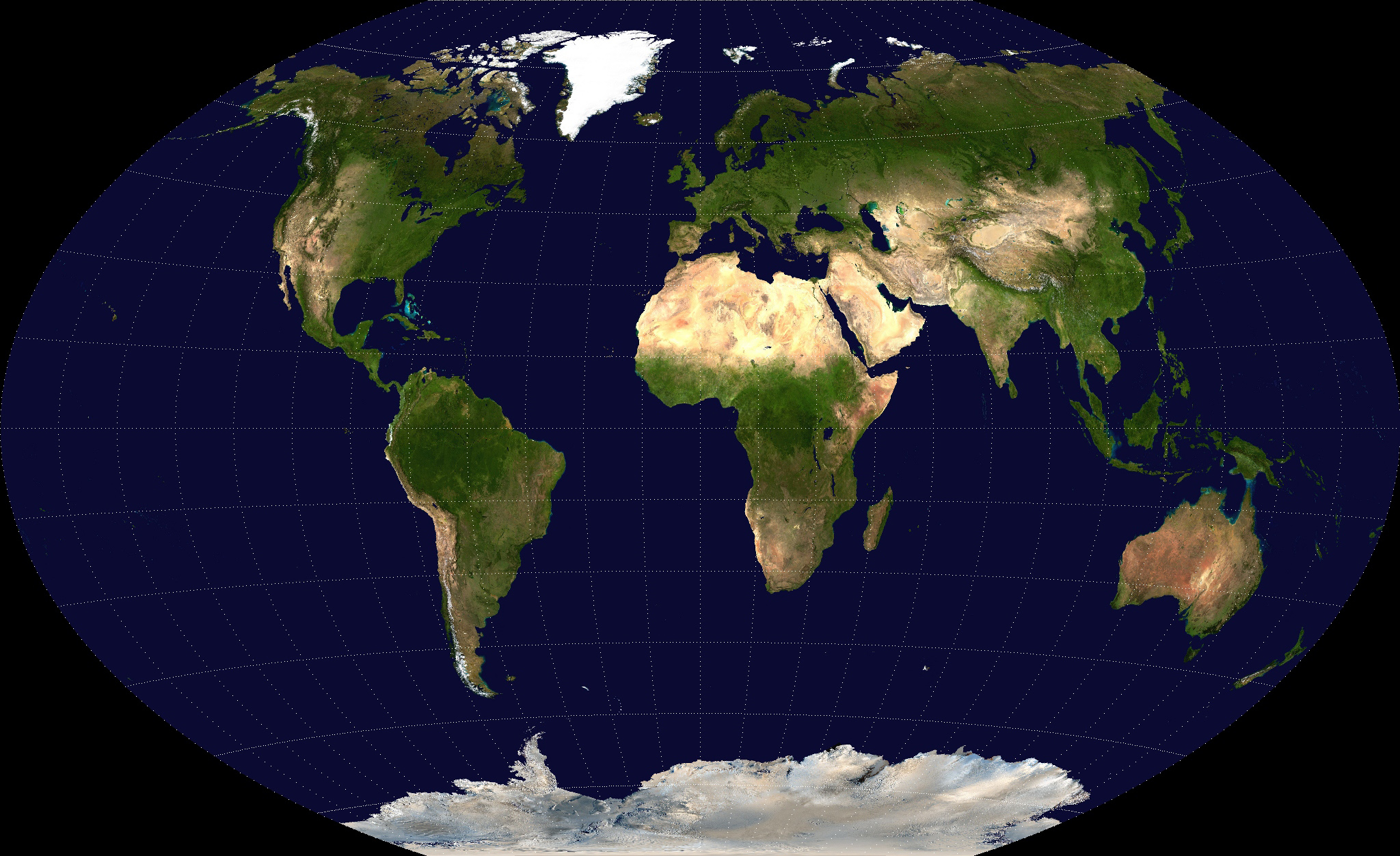
basically all areas that are bright yellow on this map :)
load more comments
(3 replies)
I believe It's close, I worked on a paper about a decade ago, and our numbers were not too dissimilar, actually it's ridiculous how similar they are. We went with the most extensive data hunt on land usage. We had non-arable land at 14.7%, which rounded up to 15% in our summary. We got multiple sources for global precipitation levels. We got registries from US, Russia, China, India, Brazil, Canada, Australia, etc totalling 65 countries, we extrapolated the rest, our extrapolation was actually 70% of the paper. We back tallied registry numbers with global weather data.
And of that, 70% is used to host or feed animals. The waste is insane.
The big takeaway for me is that maybe we should cut down on animal protein and have more plant protein in our diets.
We feed livestock almost as much plant food as we do ourselves (6m2 km vs 8m2 km). Not to mention the space taken up for grazing uses most of our agricultural land.
Just a reminder that the peaty lands or vast tundras that are only suitable for grazing sheep and goats, or horses are likely also included into these statistics.
view more: next ›