I'm from the Netherlands and use a bicycle for most of my daily commute. What isn't mentioned in the article: cycling is also dirt cheap. I bought a new bicycle 8 years ago for 500 euro, needed two times a repair of around 100 euro in total. That's like 3 months of owning a cheap car
this post was submitted on 29 Aug 2026
133 points (97.2% liked)
Climate
8941 readers
345 users here now
Discussion of climate, how it is changing, activism around that, the politics, and the energy systems change we need in order to stabilize things.
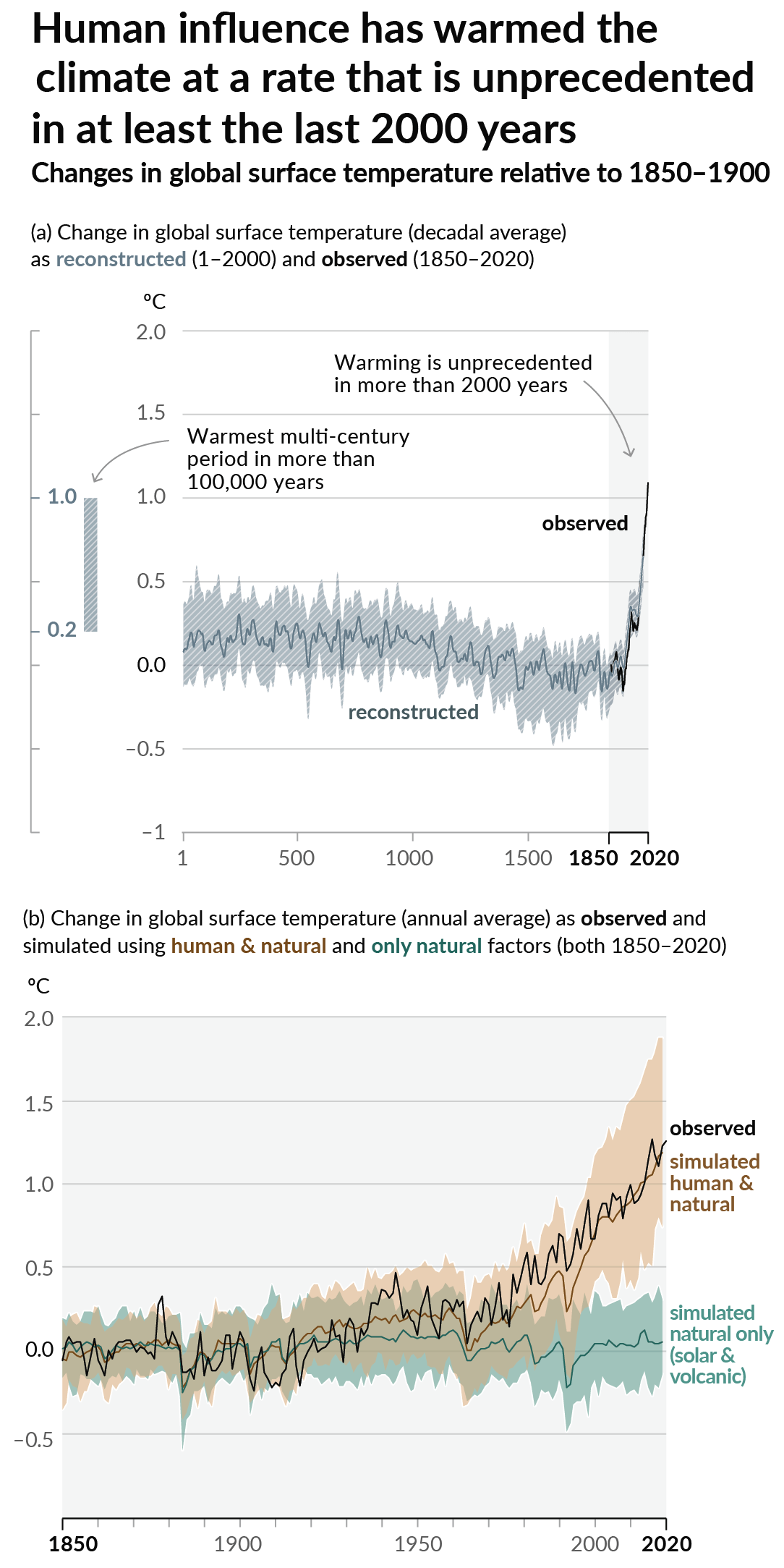
As a starting point, the burning of fossil fuels, and to a lesser extent deforestation and release of methane are responsible for the warming in recent decades:
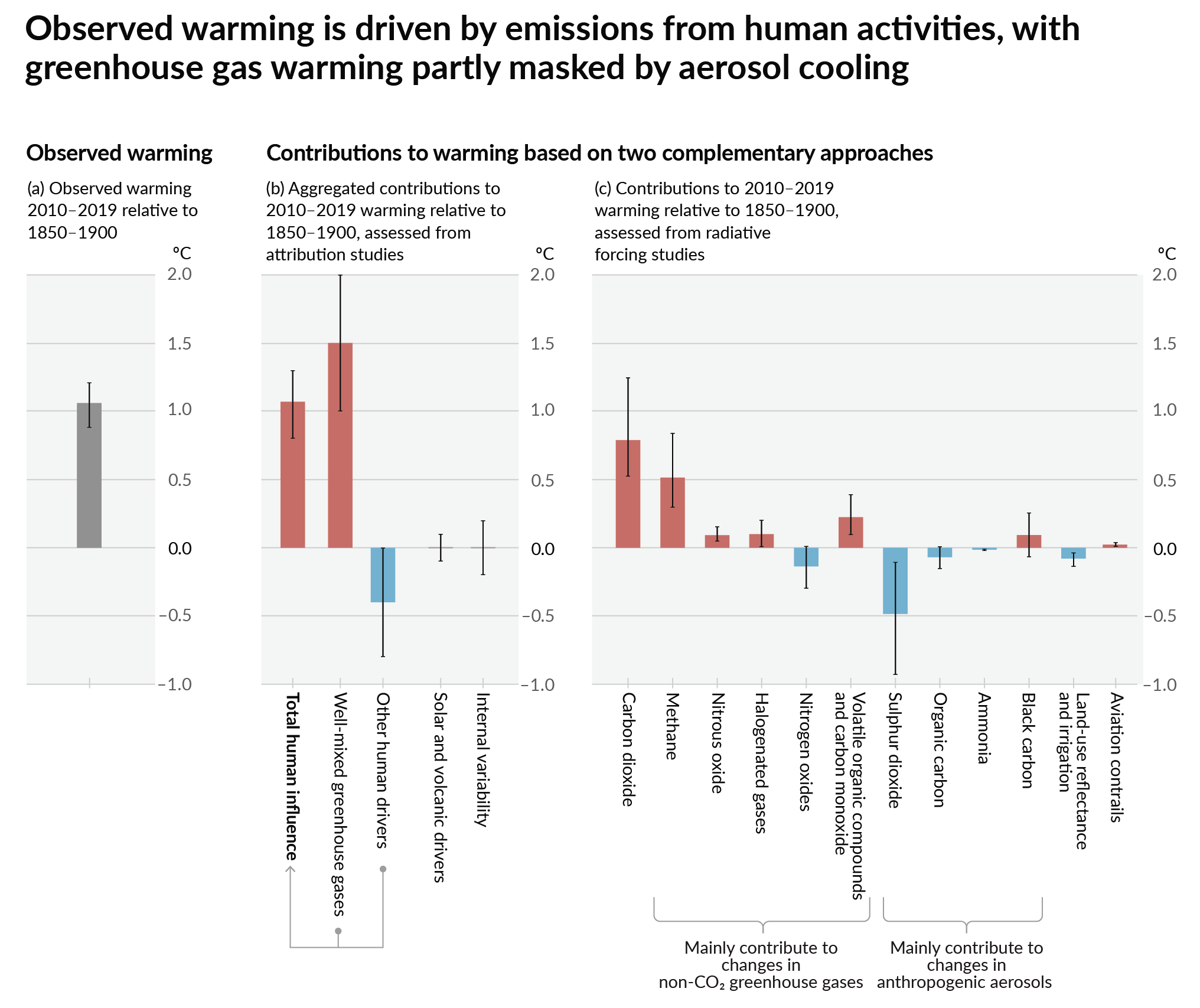
How much each change to the atmosphere has warmed the world:
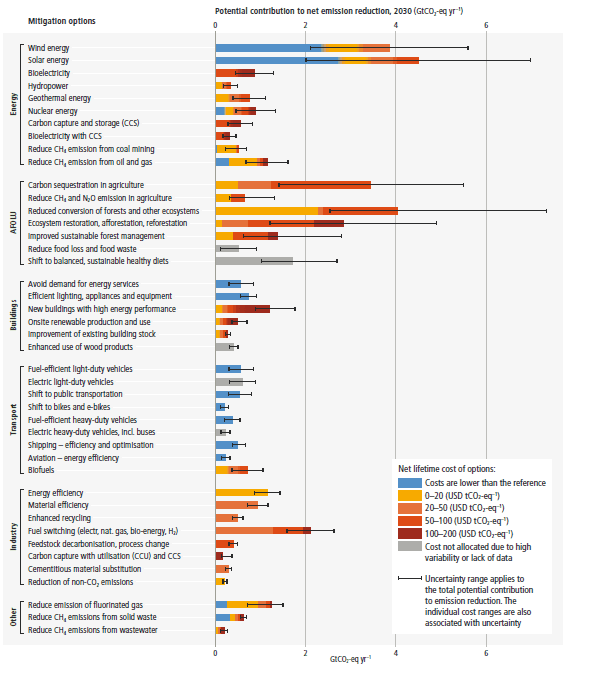
Recommended actions to cut greenhouse gas emissions in the near future:
Anti-science, inactivism, and unsupported conspiracy theories are not ok here.
founded 3 years ago
MODERATORS
People shit all over 15 minute cities. I miss it moving to Canada from the UK.
Why do they shit on them? I love them.
My guess is not enough bathrooms.
The thing is, this is impossible at this time in countless locations.
But hey, I'd love some safer bike paths in my city. Can't hurt to go this direction.
The future won't have personal cars and will be mostly local -- and US is running out of time to rebuild itself for that new reality.
Having to only go as far as the Dutch for travel would be helpful for transitioning to bicycles. The moment American city distances ( hundreds of km) are applied, everyone scraps bikes. Buses and trains and cars and planes become the conversation - bikes aren't realistic for actual travel but nice for local commutes like groceries.
The Netherlands is also one of the flattest countries in the world. We should still all cycle more, but it would require much more effort to cycle 5km in San Francisco or the Himalayas than in the Netherlands.
10-20 km is an easy bike commute distance if the infrastructure allows it. Especially with electric bicycles. I'd guess that most people in the US don't travel more than that for their daily routes.
95% of people that work in the town where I live commute from over 32km away, and many commute from 80-100km away. Some do actually do it on EBikes since we have the infrastructure for it, but the vast majority dont
In the city where I grew up, commutes are most commonly 20-30km. But there is no bike infrastructure (or reasonable metro/bus system for that matter), so its all cars.
Even in places with bike infrastructure in the US everyone is driving or taking buses for the most part. Hardly anyone lives 10 minutes biking from their job, which is probably what it would take for people to adopt biking en masse.
The town where I live now basically invented the problem, or was the earliest formal case study of it. The vast majority of people in the US do not live where they work, which is truly the underlying problem. Most people work somewhere far away from wherever they live. No place tends to pay enough for anyone to live in the same area where they work. That and also white flight from urban areas, which occurred much earlier and more commonly affects jobs that pay enough for people to live wherever they want
I wouldn't say easy. 20 km takes me an hour or more, although I am slow and don't have an electric bike (yet).
But how much "actual travel" do you do? Most of my travel is urban, where cycling tends to be the fastest and most efficient option when you factor in traffic, parking dilemmas, etc.
I'd say outside of 2-3 months in the winter, I make around 80% of trips by e-bike. The car is still there when I need it. I guess what I'm trying to say is it's not an either/or proposition.
For me, actual travel is 35 miles every day. Uphill elevation change over that distance is 800ft-1500ft depending on the direction.
Most places in the US never considered biking as a valid travel method when being designed.
Spreading out like that was a deliberate choice on the part of American city planners. It was an unnatural experiment that failed, and which can and should be undone.
https://archive.strongtowns.org/journal/2015/1/7/americas-suburban-experiment
Are you suggesting time travel as a solution?
Bike lines to commuter hubs for mass transit is the answer I'd go with, personally.
No, I'm suggesting zoning law reform. Right now, it is very often literally illegal to build in a sustainable way, and that has to stop.
I agree with that, but sorry I don't understand how thats related to biking more and mass transit, other than a complete rework of the layout of towns and cities across the country that would take decades or more to have an impact.
The rework is the suggestion, I think A gradual rework would already help and wouldn't take that long. It's just that somebody would have to start that, and I am not sure if the will for that exists.
I would have to disagree on it taking that long (as in so short) - not the change to zoning law, but the actual existing building infrastructure.
Cities are one thing, and often have better infrastructure in place (though absolutely not a guarantee), but general suburbia you wouldn't find much shift in a short time. For one, availability of sites for new construction, and two, its the most likely place for quick capitalist change (new expensive clothing store rather than say, a small grocer).
Its going to get harder the further rural you get, there is more space but won't be as much appetite. Small businesses had already been squeezed out by the likes of Walmart and their ilk, and wouldn't sensibly be able to return without other changes (like being low cost enough and affordable to the local folks to go there instead of a Walmart Super Center or whatever those giant warehouse mini mall ones are called), which means financial incentives and lower and middle class folks having more money to spend.
Which you'd need to start having people stay more local for work to grow the local community.
Its a part of a solution, but it isn't a solution by itself IMO. And its going to take time to have an impact. Time that will be on a decades-long scale, considering many towns have been around for a hundred years or more that isn't a staggering timeframe, its sensible.
It definitely can't be done in the same kind of timeline as bike lines and bus infrastructure.
(Edit: stupid mobile keyboard)
You might be surprised at how much pent-up demand for density there is in the inner suburbs (the ones old enough to still have been built on a reasonable grid system instead of cul-de-sacs).
People really gotta start saying what they mean by "density", because I've had 4 people in 700sqft, and cannot imagine people actually want to live like that.
I'm not, I just don't think there is that much by comparison to the huge swaths of the rest of the country.
For the record, I've lived in city, suburb, and more rural, and have spent long periods of time in really rural (like a town of 200 people that my mom has family in, and a not-even-a-town where its just 50+ acres of woods between everyone's home and its only 20 minutes by car, on roads with no speed limit, to reach the highway).
The time scale for those sorts of changes is long, and need other changes to make it work.
Cars have only existed for ~150 years, American cities are mostly older than that. Spreading out was a choice but it wasn’t because of cars.
At one point in time 100 years ago you could take commuter rail systems all the way from NYC to Cincinnati. Those systems were removed 1950s and then the bus companies that removed them ‘mysteriously’ stopped having so many routes (many were owned by GM…).
150 years ago, most cities were a bunch of unconnected small towns surrounding a central smaller city. They slowly grew together into the sprawl we have today.
It’s also fun. I always have a smile on my face when riding back from a grocery run or dinner out. Driving a car used to just make me aggravated.
Yeah I’ll often walk a mile or two (and back) for an errand or appt because it’s more pleasant than the driving/parking. Drivers are always stressed (kinda reasonable when you’re operating a dangerous and expensive machine, but not pleasant).
Or - we could just say it’s illegal for these billionaire crybaby warcrime shitheads to fly like they do. Same emissions savings, and the world gets infinitely better.

Why is it always Taylor Swift and not like other top 100 billionaires which I'm pretty sure use way more than her
- Woman
- Celebrity
- Not a Nazi
So she's a target
Would also make people much healthier.
I need to just deal with it and learn how to ride a bike in the snow, because that's the only thing stopping me. But it's so scary!
I don't know how swearing at pedestrians walking in the bike lane more would help reduce my carbon emissions. Satisfying though.
Well in the USA that wouldn't be a problem because people don't walk, either
Even if they did, they'd be hard pressed to find a bike lane to walk in
I dunno how much carbon would need to be compensated when leveling a mountain
Fairphone is Dutch!
Cycling like the Dutch would cut the world carbon footprint by far less than replacing our entire power supply with renewables like the Dutch.
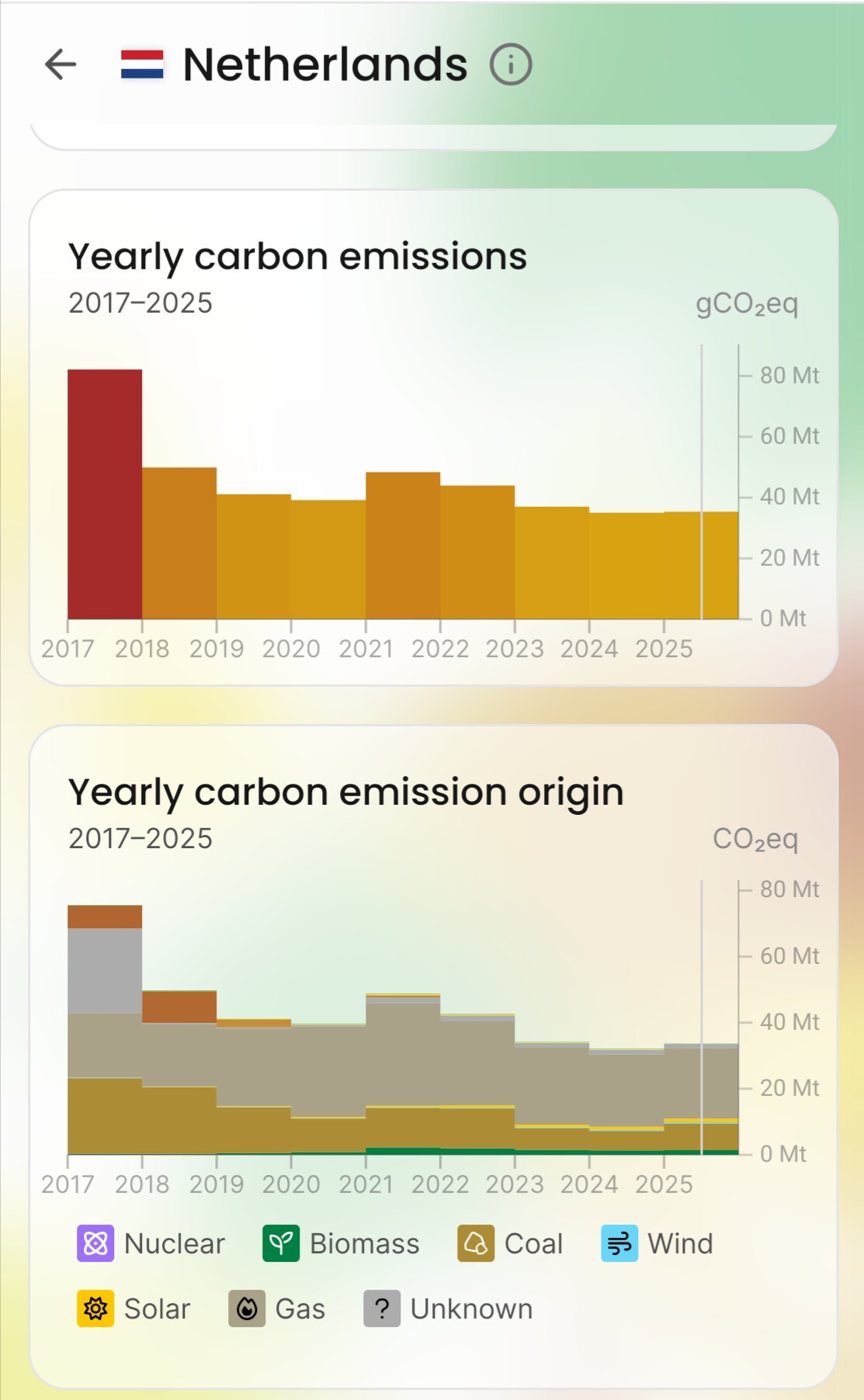
Meh. The Netherlands is doing better than we were (all new houses have to have solar panels, for example) but we still get a ton of electricity from gas, and even some from coal still. Most cars are still ICE (internal combustion engine), and efforts to reduce flights to Schiphol (are main airport) keep getting scuttled.
Countries with elevation are greener, because they have hydroelectric power (Sweden, Switzerland). France gets a special mention for being mostly nuclear, which is really good for carbon emissions.
Looking at the year by year emissions at this site is informative:
https://app.electricitymaps.com/map/zone/NL/all/yearly
How about we do both?
Living in a country that is less then half the size of Virginia would also cut the carbon footprint in the US.
view more: next ›