I added in a video demonstration to the original comment. Can you replicate the test on your gas stove and time it?
The US uses 240 V (or sometimes 208 V) for electric ovens. The normal outlets in the walls are 120 V, but things like electric ovens and electric clothes dryers use high voltage.
Huh?
I still remember Reddit bringing in Ellen Pao to take the blame for their first big wave of "censorship". (If you consider banning communities dedicated to hating fat people or minorities censorship.)
I mostly stopped playing a decade ago but have kept up with some stuff because I enjoy the lore and things. I'm really shocked they moved from the three set blocks/two set blocks models to the current "everything happens in one set" approach. It just feels like everything is rushed.
The proleptic Gregorian milk
Typical fediverse user in that sense. It's not exactly surprising, a self hostable social media does seem to have a lot of people who believe self hosting things is trivial.
I think SpiceDAO struggled with this, but that's not "a soul" lol. They bought some rare Dune book or something thinking it gave them rights to it? I don't remember the specifics.
Yes, I don't see why they think stopping a magnetic field to stop heating a pan is different than stopping a fire to stop heating a pan, it's not like it's still happening after it's stopped.
BUT [gas] heats 10 times faster
Everything I have seen has said that induction is the fastest, followed by traditional electric, and then gas is the slowest.
I'm also dubious about this "instant control of heat". Why wouldn't turning an induction stove off be the same thing? They both stop heating the pan, and then the only heat left is what's in the pan. The big difference being that the gas option has heated up the room as well, because it shoots heat all over the place, while the induction stove only heats the pan directly. Electric I get, it's going to hold some heat in the coil, but I don't see how induction differs from gas in this regard.
1
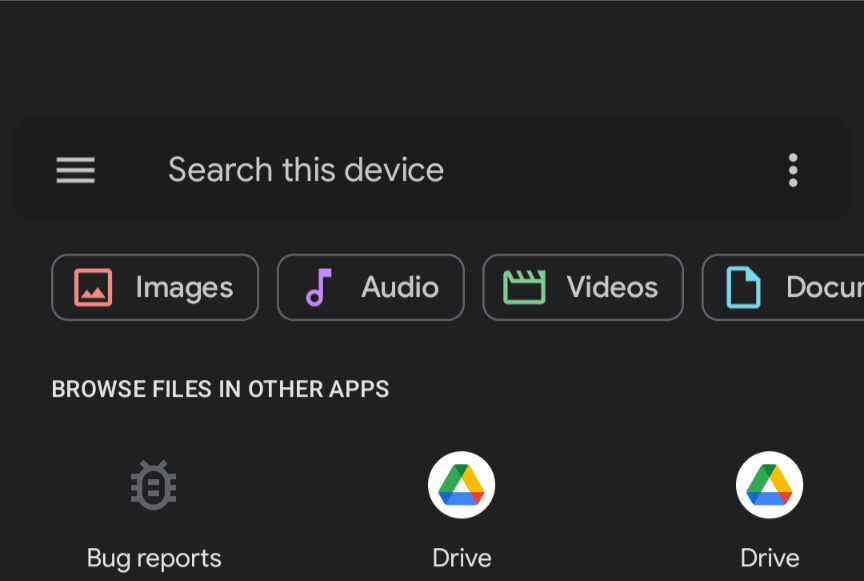
When uploading media to Discord, Google Photos is no longer showing in "browse media in other apps" on my Pixel 6.
(programming.dev)
It only shows Drive (for each account), Bug Reports (?) and System Traces (?). Of course, I just restarted my phone to see if it fixed it. It did, but as soon as I try a second time it's gone again.
I mention Discord but I'm pretty sure this file picker screen is not directly associated with Discord.
Update: This is affecting a friend of mine as well in the same way from the same time. Haven't determined if it's just Discord yet.

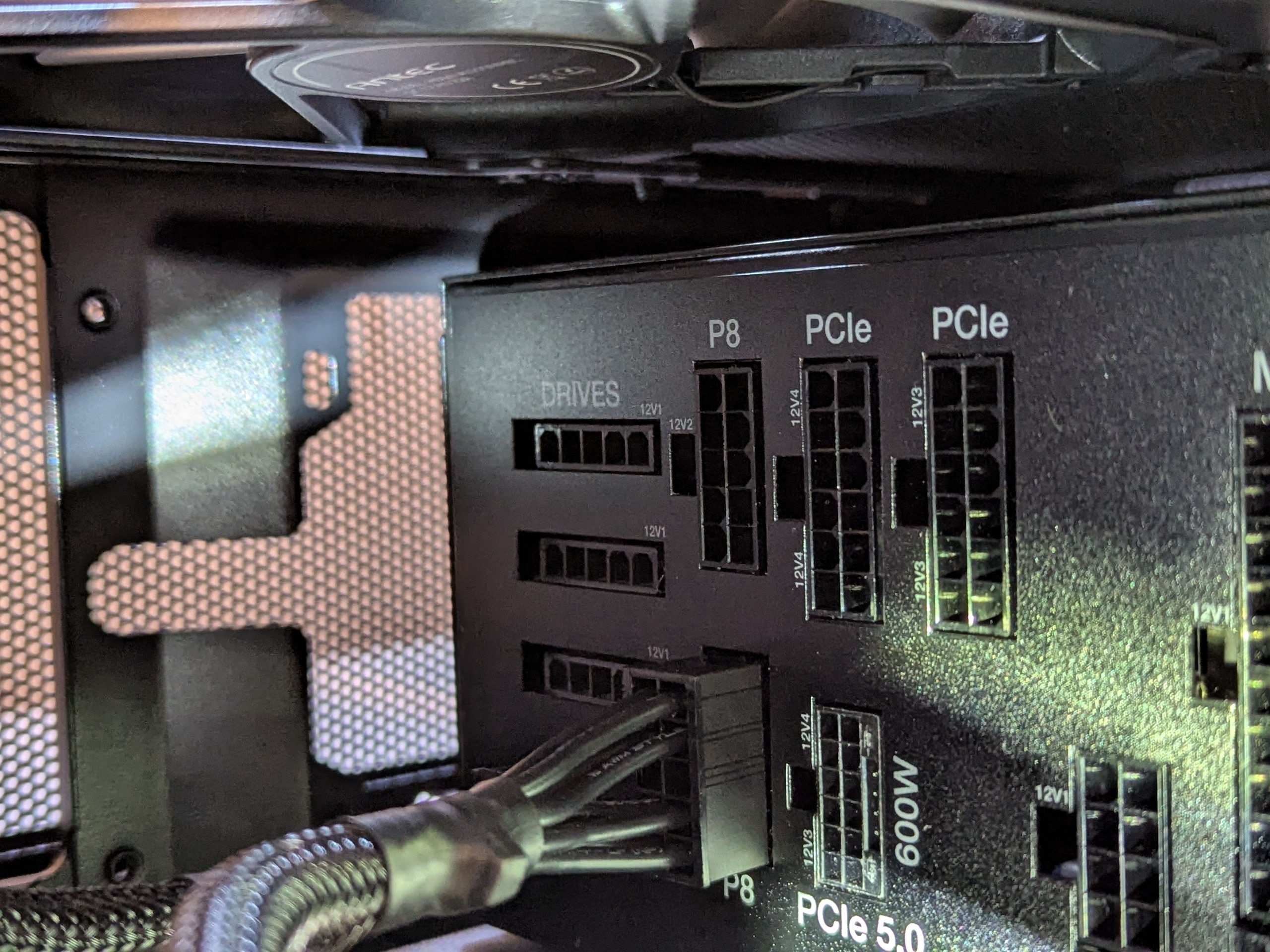
This will likely have some technical inaccuracies because I've never dealt with something this specific with PSUs. I have two slots for PCIe. I have a 3070 ti which has two 8 pin connectors. Each of this PSU's cords for the PCIe slots (minus that mysterious 600W one which I think is not for anything I'm doing due to the size) goes from the 12 pin on the PSU to two separate 8 pin connectors (well, 6 with the optional 2).
My gut feeling is to just plug a single cord from the PCIe slots I to the two slots on my GPU. But I'm wondering about what would happen if I plugged two cords into the PCIe slots separately and then put a single connector into the GPU from each. Would that be better/worse/the same/catastrophic?
I'm wondering if it has something to do with dividing the current among the different rails in the PSU or something? It has a little jumper to enable "overclocking" which does something like combining the rails, but I'd rather not fool with that. And it also might be totally unrelated to the other question. The jumper is, of course, just out of view of the pic, but it's also not really relevant.
Edit: I went with one and it's working fine.
view more: next ›
If you're using a different pan, that's an unrelated variable that skews the results.