this post was submitted on 28 Apr 2026
675 points (99.0% liked)
politics
31448 readers
2909 users here now
Welcome to the discussion of US Politics!
Rules:
- Post only links to articles. Title must fairly describe link contents. If your title differs from the site’s, it should only be to add context or be more descriptive. Do not post entire articles in the body or in the comments.
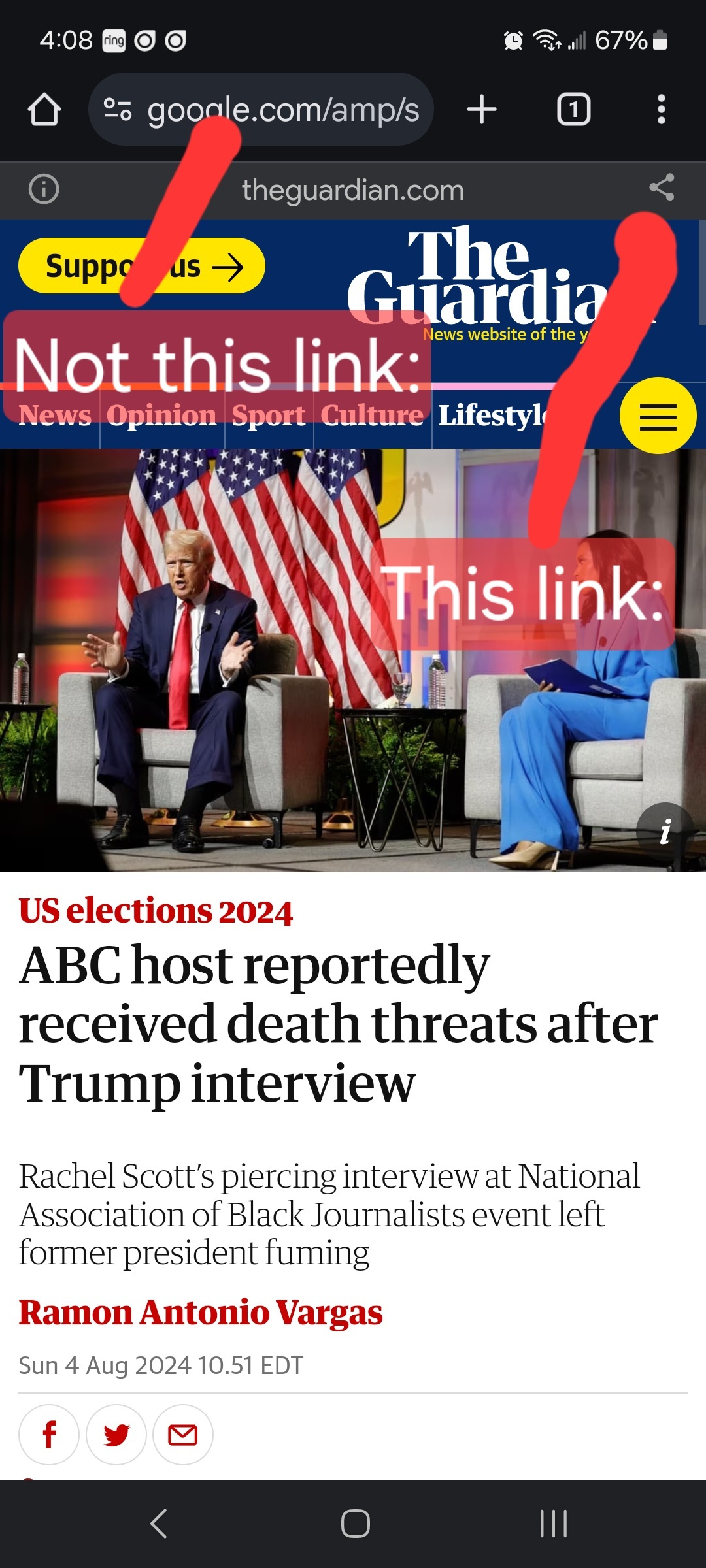
Links must be to the original source, not an aggregator like Google Amp, MSN, or Yahoo.
Example:
- Articles must be relevant to US politics and contain quality and original content. Social Media adjacent hosts like Substack are allowed, but ONLY if they tie back to a company/subsidiary. No personal or friend group blogs and no self-promotion. Articles should be worth reading. Clickbait, stub articles, and re-hosted or stolen content are not allowed. Check your source for Reliability and Bias here.
- Be civil, No violations of TOS.
It’s OK to say the subject of an article is behaving like a (pejorative, pejorative). It’s NOT OK to say another USER is (pejorative). Strong language is fine, just not directed at other members. Engage in good-faith and with respect! This includes accusing other users of being bots or paid actors.
- No memes, trolling, misinformation, or low-effort posts/comments (including reposts). If you see posts like this that anger you, do not engage. Report, block, and live a happier life than they do. Any slap-fight is subject to comment removals. Fights full of rule violations will result in temporary bans to cool off.
- No manipulating votes via bots or alt accounts; this will result in permanent bans. Vote based on comment quality, not agreement. This community aims to foster discussion; please reward people for putting effort into articulating their viewpoint, even if you disagree with it.
- No hate speech, slurs, celebrating death, advocating violence, or abusive language. This will result in an account ban. Usernames containing racist, or inappropriate slurs will be permanently banned.
We ask that the users report any comment or post that violate the rules and use critical thinking when reading, posting, and commenting. Users that repeatedly have comments or posts removed, weaponize reports, or violate the code of conduct, will be banned.
All posts and comments will be reviewed on a case-by-case basis. This means that some content that violates the rules may be allowed, while other content that does not violate the rules may be removed. The moderators retain the right to remove any content and ban users. The reason(s) behind moderator action(s) are publicly available through the Modlog.
That's all the rules!
Civic Links
• Register To Vote
• Citizenship Resource Center
• Congressional Awards Program
• Federal Government Agencies
• Library of Congress Legislative Resources
• The White House
• U.S. House of Representatives
• U.S. Senate
Partnered Communities:
• News
• World News
• Business News
• Political Discussion
• Ask Politics
• Military News
• Global Politics
• Moderate Politics
• Progressive Politics
• UK Politics
• Canadian Politics
• Australian Politics
• New Zealand Politics
founded 3 years ago
MODERATORS
SIMPLE ANSWER: Companies would learn to accept lower profit.
There's no goddamn good reason for companies to "need" 15, 20, 30% profit margins. And there's zero justification for companies to assume (a) every year is a winner and (b) every year, we gotta grow.
Every dollar they keep in excess profit is a dollar they stole from you. That extra dollar increases prices, decreases the value of the money you DO get to earn, and increases the political power of the extremely wealthy people who already own the government.
Hopefully. I could see it turning into massive layoffs, cutting things all across the board, and it'll be a war of attrition, who will cave first, me fighting my crippling desire for potato chips, or PepsiCo. needing to gouge prices. And the problem I see is that they've been winning this whole time, and the royal we are weak and dumb. But maybe we need a bigger push.
Beyond that, I'm not sure we can legislate the problem away either. And so we raise the minimum wage, we squeeze the middle class, and we probably end up in a worse position for it. But who knows, maybe we are capable of banding together as proles and speaking with our wallets.
1000% agree with you but your estimate of profit margins are grossly off. Most margins are much higher, the numbers you quoted are low margins by far. 20% or 30% would be unsustainable for a place like Amazon.
The impact of higher minimum wage on prices is way less than most people think.
First thing is that wages is only a minor share of the price already, with obviously minimum wage work again being only a minor part of the total.
The total of minimum wage workers in most companies is less than what the management makes. Sometimes even less than just the CEO. Have you ever heard fear of inflation or that prices increase because the CEOs are overpaid?
I haven't, probably because the narrative is driven by the 1%, and has little to do with real economics.
One thing people also never seem to factor into raising minimum wage, is that it would give people more disposable income to spend on things like going to restaurants and buying more toys and such.
Everyone always seems to complain "How could I afford to pay my employees more!?" and they never seem to figure more people would be spending money on your business.
Also simply put, if you can't pay your employees a livable wage, you shouldn't own a business.
As is tradition in economics, this is an idea someone had at some point, and has been touted as scientific fact and misapplied ever since (see also supply/demand curves, Jevon's paradox, and so on). It has no basis in reality.
https://www.cato.org/commentary/wage-price-spiral-explanation-inflation-dangerous-myth
Here is an article from the Cato institute disagreeing with the wage-price spiral myth. This is from a libertarian think tank -- even they don't believe it! Of course the article has the usual economics drawback of basically just guesstimating a theory and never looking at any data. Because as soon as you do that you end up with conclusions like "the living standards of Cuba went up faster than those of comparable nations with a capitalist system, even without correcting for the immense blockade by the US" and no one wants to hear that sort of stuff.
yeah, it's not like they're keeping prices low enough for the minimum wagers to buy it. It will increase the prices somewhat, but it's just what the market will bear.
Interesting article... thanks for sharing. However the article seems to be about explicitly raising the pay of a single class of workers - rail workers or specific union workers - not all low-paid workers like a min wage increase will do. It discusses how the impact of a wage increase is limited as it drives business to other competitors so doesn't result in an inflationary spiral, but it's not so clear that can't happen to some extent with a min wage increase that immediately impacts the entire market and multiple industries. I personally support a min wage increase but this article doesn't seem to make the argument you suggested.
Well, regardless, prices increase while wages stagnate regardless, and the federal minimum wage does seem to drive the floor and by consequence probably a lot of the rest of that stagnation.
Doesn't seem to me that it makes sense to peg a federal minimum wage that stays the same for long periods of time while also seeing "inflation" constantly drive prices up (I'm using inflation as a catch-all to sum up all flavors of price increase, not just what's strictly meant by the term normally). It's inconsistent - two sides of one coin, but somehow one keeps getting larger while the other remains unchanged...?
But beyond that, yes, you're right, it's no panacea of any kind, because the bigger problem is that all markets (including labor markets) are driven and in effect controlled by the largest players. They don't have to collaborate and conspire directly, though of course being above the law they often happily do. But yeah, not necessary, by and large they merely have to act in their own self-interest to produce the system of advantages for them causing the accompanying monstrosities we see everywhere for everyone else (us).
Raising the minimum wage is good but it isn't anything close to a solution, the spiraling problems keep spiraling. But remember, that's constantly, always happening, in directed ways, regardless. Bad idea to worry over downstream effects of things that clearly help folks struggling the ~worst. Address the actual problem, leave those folks out of it, I say.
[Edit: if you'd like a real-time example of price changes and govt relief being solidly one-sided - watch what happens as companies fight for and receive the court-approved reversals of collected tariffs. You'll see some token price decreases and a few more strident responses, I expect, but by and large companies will have raised their prices to keep their profit margins intact, having a hateable president to blame and garner acceptance among consumers - and then they'll get back the money they did send for the tariffs, then keep prices high because that's how it works when people accept new normals (and boyyy have we Americans proven great at accepting new normals). Then fund some campaigns/events/PACs/whatever with a slice of the money as thanks, keep the good times rollin.]
[Edit edit: looks like when this would take effect is spread out so long anyway that it just gives plenty of time to do what I'm describing and I guess you were worried about too maybe. Lovely.]
It does tend to be a push pull system, but with capitalism it is really the only thing that can be done, inflation will always go up and wages will always follow, often there is a lot of lag though. It's kinda like playing catch up, if we find a living wage that works it will only work for a while then the purchasing power of that wage will slip.
What we need is a system that adjusts every year that way the corporations would have to find a more sustainable method to address earnings, because they would not have the lag between cost of living and minimum wage.
Payroll is only the fraction of the price for any product or service.
If you raise your payroll, it only raise the price for your product or service by the percentage of the payroll cost for your product or service.
So yes, things will cost more, but the employees pay will raise more than the price of the product or service, giving more buying power to the employees.
This is a really dumbed down explanation. There are other factors to consider when pricing something. But considering that payroll is only a portion of the price equation, any increase in dollar per hour is beneficial to the employees and will outpace the increased cost of the product or service.
if companies chase the same profit levels, then yes. that is the inherent flaw with the state of capitalism in today's world. it requires the working class to get exhausted so the rich can have a greater unnecessary level of wealth and corporations can return profit to shareholders.
In other words; its a rigged game and we aren't part of the fixing we are part of the hurting.
Yes it may have an effect on prices, but there are second order effects. One example is that it would also have an effect on a huge number of people's ability to pay those prices. A customer base that can afford goods will likely increase sales. Increasing sales can increase revenue.
Markets are complex dynamic systems and often the key to getting a healthy economy is removing choke points where money doesn't flow. Not paying people enough kills demand. An economy with low demand is dying.
A question to add on to yours is: If inflation is defined (simplistically) as too much money in the system chasing too few products, then wouldn't taking money out of the system via taxes have a rate limiting effect on inflation?
Being that if minimum wage increases would an increase on taxes for wealthy citizens slightly offset this increase?
No. That is because of the simplistic definition.
If people have "too much" money, the demand of products will go up. Specially "luxury" products. As that is what people buy when they have "too much" money. Increasing demand increases prices, therefore, inflation.
The same is true if the supply of "luxury" products decrease. For the same reasons.
However, if inflation is due to an increase of "essential" goods' prices, it's trickier. That is because increasing essential prices won't result in a decline of their demand. They are essential, people will stop buying the things they don't need, not the ones they do. Therefore, the demand of "luxury" goods will fall.
Only when people can't afford the essential goods will they stop buying them. Which probably would mean death/emigration. Only then will demand fall, because there's literally less people.
When you tax, it's the same case. People have less money, so demand for "luxury" items will fall.
So technically yes, it would reduce inflation, since there's probably some "luxury" goods in the basket you are using to measure inflation. But it won't actually reduce the price of essential goods, which is what most people would expect from a fall of inflation.
Of course, some fall of demand for "luxury" goods could mean a fall in "essential" goods. For example, a fall in water-gun fights or golf-course watering would mean a fall in demand for water, which is an essential good. Economics is not a simple subject
The USA is a consumer economy.
Consumption is good. Higher wages, more consumption.
Businesses are ALWAYS raising prices, we've had 20 years with seven bucks an hour minimum, and that sure as Hell didn't keep prices the same.